Thursday, November 23, 2006

Review of the News, November 23


Spanish Conquistador Juan de Onate, who celebrated the first American Thanksgiving on April 30, 1598


Offer Thanks to God, not to the State


As a Confederate sympathizer of (partially) Iberian heritage, I would prefer to celebrate Thanksgiving on April 30, the anniversary of the true first Dia de Gracias, celebrated by Spanish explorer Juan de Onate and his caravan in 1598.


There is nothing inappropriate about commemorating the tradition begun by the New England Puritans, or the earlier celebration conducted by Catholics in New Mexico, or both, since the point of each version is the same: A humble recognition of our intimate and comprehensive dependency on God for everything that makes life possible, and the adornments that make it a joy.

The problem with the standardized Thanksgiving celebration – as with so much else – is that it has its roots in a cynical wartime propaganda measure (introduced by an unbelieving president), and thus cannot escape the taint of State-worship. Be that as it may, I do intend to eat a scandalous amount of food later today, and thus will have to be brief in this morning's update (by way of pre-emptive penance I plan on doing several hundred pushups, skipping rope for about twenty minutes or so, and otherwise subjecting my aging and too abundant flesh to useful athletic trauma).


Bring Back Wyatt Earp!

So let me see if I understand the story so far:

Undercover narcotics agents in Atlanta claim to have purchased an unspecified amount of illegal drugs from an unidentified man inside the home of 92-year-old Kathryn Johnston just hours before the paramilitary raid on the elderly lady's home that took her life, and left three of the tactical officers wounded.

Now the “John Doe” has fled, and authorities are refusing to release the “no-knock” warrant, despite the fact that it's a public document, because of what is described as an “office policy” -- which I'll wager was about ten seconds old at the time of its first invocation.

Color me cynical, but I'm guessing that we will eventually learn some or all of the following:

1)The warrant was defective;
2)The “evidence” behind it came from an unreliable source, such as a paid informant or a corrupt cop – or even the “John Doe” accused of making the buy, who cited a phony address as part of a deal;
3)As an alternative to the foregoing, “John Doe” doesn't exist, and the police will never find him, for the same reason O.J.'s diligent search has failed to find Nicole's “real killers,” and his fellow mass murderer George W. Bush has failed to find Saddam's “reconstituted” nuclear arsenal;

The most important thing we will learn will be details of a federal role in the killing – no, let's call it by its proper name: the murder – of Kathryn Johnston.


Kathryn Johnston: Victim of State murder.


This morning's Atlanta Journal-Constitution reports:

“By most accounts, the block where Johnston lived is quiet and unassuming. Yards are neat, and many of the residents are elderly. But, of the 15 homes on the block, three are either abandoned or empty and six [including the late Mrs. Johnston's] have burglar bars on windows and doors. And the Johnston home is just a block east of an area known as `The Bluff,' a section so beset with drugs and crime that federal authorities and Atlanta police have targeted it with an effort called Project Safe Neighborhoods. The program brings increased drug and gun enforcement, as well as inspections for code violations. Dozens of homes have been torn down since 2002 to prevent blight.”

The bullet-riddled mortal remains of Kathryn Johnston testify to the fact that few things are more lethal than a Federal initiative intended to enhance the “safety” of a residential neighborhood.

If the police were genuinely concerned about a drug deal at Mrs. Johnston's home, and they were convinced that the dealer was on the premises, why the hell didn't they simply stake out the home and wait?

Why was it necessary to deploy a paramilitary squad to kick down the door?

My best guess is that the department was reacting to the perverse incentives created by Federal counter-narcotics assistance. A military-style raid, after all, would underscore the magnitude of the “crisis” in Johnston's neighborhood, thereby keeping federal money flowing.

So this was, in a sense, a contract hit – if my suspicions are correct. The alternative – Katherine Johnston was killed because of a mixture of pathological incompetence and clinical indifference – is even worse.

Incidents of this sort are often attributed to a “Cowboy mentality” on the part of police tactical units, and rhetoric of that sort often invokes the iconic embodiment of the Cowboy Lawman mythos, Wyatt Earp. This is a gratuitous insult to cowboys of all varieties, of course, and a culpable misreading of Wyatt Earp's actual record.

Earp was not the dashboard saint played on the Silver Screen by Burt Lancaster, or on the small screen by Hugh O'Brian; he was probably a horse thief in Missouri before becoming a constable in Kansas. After ending his brief career in law enforcement, Earp frequently found himself drawn into small-time scams of various kinds. And we shouldn't ignore the fact that during his tenure in Tombstone, Earp was a Fed, with all the unfortunate connotations that go with that status.

But unlike today's opportunistic paramilitary police operators, Earp – the Shootout behind the OK Corral notwithstanding – resorted to gunplay with commendable reluctance. On most occasions he out-thought and out-maneuvered the bad guy, and his preferred method of dealing with an armed suspect was to “Buffalo” him – approach him from the blind side, grab his gun hand, and stun the subject by clubbing him with the butt of his revolver. (This tactic was depicted very well in the Kevin Costner bio-pic Wyatt Earp, even though the much-maligned Tombstone offers a sounder depiction of the Marshal's life – Val Kilmer's odd choice to play Doc Holliday with a Foghorn Leghorn accent notwithstanding.)

In his witty and compulsively readable book Inventing Wyatt Earp: His Life and Many Legends, Allen Barra quotes the following observation by Bat Masterson, who was Earp's comrade in the legendary Dodge City Peace Commission: “[Wyatt], never at any time in his career, resorted to the pistol excepting in such cases where such a course was absolutely necessary. Wyatt could scrap with his fists, and had often taken all the fight out of bad men, as they were called, with no other weapons than those provided by Nature.”

Too often, Wyatt's confrontations (including the famous shoot-out in Tombstone) grew out of efforts to enforce civilian disarmament (aka “gun control”) ordinances. And there are other aspects of his personality, career, and legacy about which I'm ambivalent.

For now, suffice it to say that if the “Cowboy mentality” Wyatt Earp embodied were widespread, we wouldn't be seeing so many innocent people die in needless paramilitary police raids.

Wednesday, November 22, 2006

Review of the News, November 22


Tased and Confused

In the welter of partial disclosures and contradictory eyewitness accounts that are emerging about the Taser attack on UCLA student Mustafa Tabatabainejad, two facts have achieved saliency:

First, the UCLA officer who used the Taser, 43-year-old Terrence Duren, who has been a policeman since 1988, has a somewhat dubious employment record, having joined the UCLA force after being fired from the Long Beach Police Department sometime in the late 1990s. Officer Duren, who at first glance appears to be a solid and respectable guy (that's an important part of this story, one I'll return to shortly), has been involved in controversial use-of-force incidents on at least three previous occasions, including an incident in which he shot a mentally ill vagrant.

The second interesting fact is that Officer Duren served in the first Gulf War. This is significant, in my view, because it illustrates the ever-deepening amalgamation of law enforcement and the military, both in terms of the shared talent pool and the increasing reliance on military tactics, training, hardware, and – most importantly – mind-set by local police agencies.

Consider the explanation given for the fact that Duren used his Taser five times on the UCLA undergraduate. As paraphrased in the Los Angeles Times:

“The officers decided to use the Taser to incapacitate Tabatabainejad after he went limp while they were escorting him out [of the computer lab at the UCLA library] and after he urged other library patrons to join his resistance, according to the university's account.”

If the student was “limp,” nothing prevented the officers (there were four of them, after all) from lifting the student and carrying him bodily from the room. Yes, it looks bad, albeit not nearly as bad as resulting the Abu Ghraib mise-en-scene -- a screaming student, surrounded by armed, uniformed men, with other students looking on in horror.

Both Tabatabainejad and several eyewitnesses add a key element missing from the official account, specifically that the Taser was used because he went limp. The student insists that he went limp when one of the officers refused to let go of his arm. He was leaving, in other words; he simply didn't consent to being dragged bodily from the room like a criminal.

Tabatabainejad, after all, is a California-born American citizen. He objected to the demand to show his ID, according to his account, because he suspected he had been singled out for harassment on account of his Iranian ancestry. (As someone who has been mistaken for an Iranian, a Saudi, an Egyptian, and various other ethnic types, I can sympathize somewhat with his complaint.) It's understandable to me why Tabatabainejad would insist on retaining a particle of dignity, and any legitimate peace officer – whose priority in a situation of this sort is to de-escalate – would permit the young man that insignificant moral victory.

But Officer Duren, like nearly everybody else employed by the Homeland Security State, is not a peace officer. His objective was to make the subject submit to the State's power – to “win” the engagement and hold the territory. His actions, and those of his comrades, reflect a military mind-set.

In chapter seven of my 2001 book Global Gun Grab (which may still be available from my erstwhile employers; if so, snag a copy), I cite a key insight from Diane Cecilia Weber, a law enforcement analyst at the Cato Institute: “[T]he mindset of the soldier is simply not appropriate for the civilian police officer. Police officers confront not an `enemy' but individuals who are protected by the Bill of Rights. Confusing the police function with the military function can lead to dangerous and unintended consequences – such as unnecessary shootings and killings.”

Tabatabainejad was shot five times – by a Taser, a “non-lethal” weapon that has proved to be quite lethal in too many recorded incidents. I'm of the opinion that providing Tasers to police officers has actually abetted the unnecessary use of force, rather than containing it.


What we're dealing with here is not a hardware issue – firearms vs. Tasers – but a “software” issue – a military mindset vs. that of a peace officer.

For decades – beginning in the late 1960s, and escalating through the Nixon years – Americans have been indoctrinated to believe that the struggle to contain street crime is a literal “war.” (Go here for a clip from a very popular 1980s prime-time cop show that offers, via a very badly written and dubiously directed monologue, a version of this propaganda trope.) The “war on crime” soon spun off subsidiary “wars” on drugs, child abuse, and other marketable pathologies that dealt with discrete portions of the population.

With the advent of the “war on terror,” everyone's a suspect – and when the demands of State agents are met with anything other than instantaneous and unqualified submission, a citizen/subject/suspect becomes the “enemy.”

As I mentioned above, Officer Duren doesn't strike me as a malefactor. He's probably a decent guy, as are most of those who fill the ranks of the Homeland Security State. But as Isabel Patterson warned, most of the evil done in the world is done by “good” people.

The Wrong End of the Telescope


Here's a very brief excerpt from my next book, which is very much a work in progress:

“When it comes to protecting individual rights, too many Americans are examining the issue through the wrong end of the telescope, as it were. They tend to obsess over distant and improbable threats posed by governments half-way around the world, while ignoring or minimizing the very tangible dangers to liberty posed by the government ruling us right now. Americans also dwell on the atrocities committed by the worst regimes in history – National Socialist Germany, Soviet Russia, and other mega-murdering tyrannies of that type – while ignoring clear and compelling warning signs that our own country is rapidly succumbing to similar totalitarian tendencies right now.”

Here's a splendid example of what I'm describing:

"The dirty little secret of the computer industry is that leading American computer companies are helping the Communist government of China spy on Chinese citizens. Firms accused of enabling the Chinese police state include high-profile names like Microsoft and Google. Now, another company, Cisco Systems, is facing investor backlash for its part in helping the Communist regime in Beijing....Every so often it is important to be reminded that evil triumphs only when good people do nothing. The shareholder revolt at Cisco highlights the importance of an informed citizenry taking an active stance against the perpetuation of evil.”

Bully for Cisco's rebellious shareholders, I say – even as I ask what may be a more pertinent question: When can we expect a similar shareholder revolt against the tech industry's collaboration in the efforts of our Regime to build a comprehensive surveillance system in this country?

Civil liberties advocates of various stripes have filed a total of 48 lawsuits against various telecom giants – including BellSouth, Cingular Wireless, Sprint, MCI, Verizon, AT&T and Comcast – for their involvement in the Regime's warrantless wiretap program. A federal judge has ruled – suh-PRIZE! -- that the Regime is not required to comply with a freedom of information act request filed by advocacy groups seeking documents about the number of wiretaps and the program's chain of command.

It's a “national security” issue, y'see.

Beijing says exactly the same thing about its domestic surveillance program, too.

And many – if not most – of the people building Beijing's Big Brother system are doing exactly the same thing here, only our version is much more advanced than theirs.

So ... isn't it an exercise in mote-plucking and beam-avoiding to focus on what's going on in China?

Hey, I'm just asking.

Heroic Security Officers Wounded in Fatal Clash with Insurgent ...


... or, at least, that's how the killing of 92-year-old Atlanta resident Katherine Johnson during an armed drug raid is being depicted in the “free” press.


Imperial Outsourcing

Every time I read something extruded by Max Boot of the Council on Foreign Relations, I'm prompted to remember that “Caligula” meant “little boots" (the despicable little creature's given name was Gaius). Little Max is Caligulan in his perverted appetite for power and his disdain for freedom. Taking a page from the syllabus of mortal errors made by ruling class of late Imperial Rome, Max – along with a fellow think-tank Babbitt -- insists that the US should look to rented foreigners to defend the empire's far-flung garrisons:

“Michael O'Hanlon, a senior fellow at the Brookings Institution in Washington, and Max Boot, a senior fellow at the Council on Foreign Relations in New York, have proposed allowing thousands of immigrants to serve for four years in the military in exchange for U.S. Citizenship....More than 40,000 noncitizens are serving in the U.S. military on active and reserve duty, and about 8,000 permanent residents enlist for active duty every year. Margaret Stock, a lieutenant colonel in the U.S. Army Reserve and a professor at the U.S. Military Academy at West Point, said that a recent change in law has given the Pentagon authority to bring foreigners to the United States to serve in the military, but that the Pentagon has not exercised the option.”

Call it Imperial Outsourcing – turning to immigrants for coffin-stuffers because going abroad to kill and die on behalf of our ruling elite is a job Americans increasingly won't do.

It could also be a case of importing people to serve in the Leviathan's domestic army, as well.

This sort of thing has been done before. During the War Between the States, it was common practice for immigrants freshly arrived in New York to be stuffed into a Union uniform and sent off to kill Confederates. And thinly assimilated immigrants were often used in frontier duty, “chastising” or “pacifying” Indians.

Immigrant officers were used in the round-up of the Navajo for interment at New Mexico's Bosque Redondo gulag, as described in Hampton Sides' Blood and Thunder (to which I've referred before). Referring to the officers who served under Kit Carson as the Navajos were rounded up, Sides writes:

“Time and time again they demonstrated themselves to be a uniquely inept and unruly bunch. Overworked and underpaid, many of them drunks, a good number of them immigrants fresh from paces like Ireland, England, and the Netherlands, they hated having to do this depressing work in a desert wasteland.... [N]early half of the officers serving on the Navajo campaign were either court-martialed or forced to resign.... [A]mong other things, Carson's officers were charged with `murder, alcoholism, embezzlement, sexual deviation [one was caught in bed with an enlisted man], desertion, and incompetence.'”

This army of degenerates was given orders by James Henry Carleton to break the spirit of the Navajo, compelling them to submit to the central government under the threat of literal extermination.

Carson, who hated this duty and did what he could to mitigate it, was given this message from Carleton to pass along to the Navajos:

“This war shall be pursued against you if it takes years, until you cease to exist or move [into the reservation]. There can be no other talk on the matter.”

For some reason, I find myself wondering if this sort of thing could happen on a much grander scale now that our nation is being turned into the modern equivalent of one vast Indian reservation....

Tuesday, November 21, 2006

Review of the News, November 21


Quote Of The Day

Our present selection addresses a persistent source of perplexity: Why do so few subjects of the regime notice our ever-deepening condition of servitude?

“From the time of the Magna Carta and even earlier, the makers of English law have been concerned to protect the physical freedom of the individual. A person who is being kept in prison on grounds of doubtful legality has the right, under the Common Law as clarified by the statute of 1679, to appeal to one of the higher courts of justice for a writ of habeas corpus. This writ is addressed by a judge of the high court to a sheriff or jailer, and commands him, within a specified period of time, to bring the person he is holding in custody to the court for an examination of the case – to bring, be it noted, not the person's written complaint, nor his legal representatives, but his corpus, his body, the ... solid flesh which has been made to sleep on boards, to smell the fetid prison air, to eat the revolting prison food.

This concern with the basic condition of freedom – the absence of physical constraint – is unquestionably necessary, but is not all that is necessary. It is perfectly possible for a man to be out of prison, and yet not free – to be under no physical constraint and yet to be a psychological captive, compelled to think, feel and act as the representatives of the National State, or of some private interest within the nation, want him to think, feel, and act. There will never be such a thing as a writ of habeas mentum; for no sheriff or jailer can bring an illegally imprisoned mind into court, and no person whose mind had been made captive ... would be in a position to complain of his captivity.”

Aldous Huxley, from Brave New World Revisited

Define “Temporary”

All created things have a life-span. Stones will eventually be worn down to pebbles, and then to dust. The “fixed” stars are nothing of the sort; constellations will change (some have, within the memory of man), and the radiant orbs that compose them will themselves grow cold and die, or erupt into the cataclysmic fury of supernovas.

With this in mind, it's useful to ask: What does the regime mean when it hints that there will be a “temporary” increase in troop deployments to Iraq? What is their time horizon, if any?

In 1898, a “temporary” telephone tax was imposed to pay for another demented war, this one intended to grab a few territories from the pathetic remnant of the Spanish Empire. That “temporary” tax was repealed last year -- more than a century after it was first imposed.

Back in World War II, with the aid of the late Milton Friedman, the regime under FDR imposed the payroll withholding tax as another “temporary” wartime expedient. The expiration date of that monstrous imposition has yet to be reached, more than half a century later.

In 1950, U.S. Troops were deployed to Korea as part of a temporary “police action” under UN command. Our military temp workers remain deployed in Korea today.


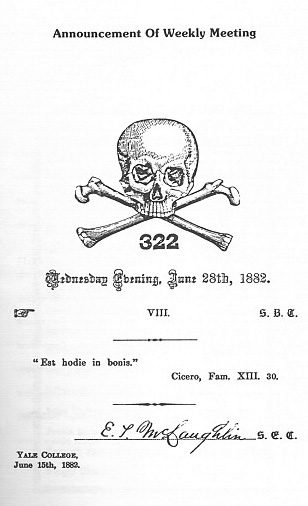
A biographical variation of this principle is offered by the case of Skull & Bones legacy George W. Bush, who was given the place-filler secret name “Temporary” back in 1969; his attention occupied by other matters (such as evading military service in Vietnam – a perfectly sensible course of action not available to less privileged kids), “Temporary” never bothered to change the default label.

So once again I inquire: When we're informed that the Pentagon is considering “a substantial but temporary increase in American troop levels in Iraq,” what is the projected half-life of this “temporary” deployment?

Unless our defeated force is driven out of Mesopotamia in a panicked, disgraceful rush, or – even worse – cut off and slaughtered (did the brain-boxes running this war ever play "Risk"?), I suspect that there will be American troops entrenched in Iraq until Jesus comes, or thorium 232loses its potency, whichever comes last.

The build-up itself may be “temporary,” if only to provide a suitably inflated troop count that can be reduced at some unspecified future date in order to provide an illusion of “progress.”

Note as well that the Pentagon describes this scenario as the “surge option.” Remember that expression “surge”; one advertised purpose of the proposed “national service” program supported by Charles Rangel and others – in which all 18-year-olds would have to enlist in federal service, either in the military or some other role – would be to provide “surge capacity” for military missions abroad.

“Channeling,” revisited

Back in 2002, Navy Recruiter Lt. Jason Hudson, whose territory is centered in Tennessee but includes parts of five states, was puzzled by a directive that was apparently designed to promote enlistment of white recruits while diverting equally qualified black enlistees.

Lt. Hudson spoke out against what a policy he regarded as racially invidious and probably illegal. That policy was repealed, but Lt. Hudson faces a negative evaluation that he suspects, reasonably, to be a retaliatory action by his superiors.

There may be little substance to Lt. Hudson's complaints, but this episode offers a suitable occasion to review the Vietnam-era practice of “Channeling,” in which the Selective Service System enforced a de facto caste system.(.pdf)

The draft is not “only about putting men in the military,” observes activist Ron Jacobs in CounterPunch. “It is also about maintaining the stratification of society based on society's current economic needs [as those “needs “are defined by the ruling political class, of course – WG]. Prior to 1969, the military draft consistently deferred men who were considered to be `college material.' In addition those in college whose studies might have been useful to the war machine-say in the areas of technology and science-were granted deferments. This policy was called `channeling' and was defended as being in the national interest. Its converse-the channeling of men who weren't considered `college material' to the front lines, was by default, also considered to be in the national interest. After 1969, when the national draft lottery was introduced in the name of supposed fairness, the policy of channeling was continued via the AFQT [Armed Forces Qualifying Test]. Those young men whose numbers were drawn who were sent to the front lines were more likely to have scored lower on the [AFQT]. Those young men whose numbers were drawn who scored higher, usually because they had received a better education, were assigned to units more likely to be out of harm's way, probably in another part of the world.”

Future Vice President Deadeye Dick Cheney, who had “other priorities” than service in Vietnam, was able to channel-surf his way to multiple deferments, as were many others in the neo-Trotskyite War Party.

The fundamental evil of conscription is it asserts a claim no government has a right to make, namely that it is entitled “to every dollar and every right arm in the country for its protection," as the New York Times explained in a pro-draft "Civil War"-era editorial I'm doing my best to make notorious.

The draft always entails regimentation of the economy as well as the impressment of slave labor. This is why Bernard Baruch, the Woodrow Wilson regime's Economic Commissar, demanded the power to control the entire labor force, set prices, and control all productive activity. He also administered the “Work or Fight” initiative, through which the federal government commanded men who received deferments to be “faithfully, continuously and usefully employed in a capacity and for an enterprise determined by the government to be essential to the prosecution of the war....”

In brief, as I've explained elsewhere, conscription is not merely integral to communism; it is communism.

Philip Gold, author of the new book The Coming Draft: The Crisis in Our Military and Why Selective Service Is Wrong, points out that like any other central planning scheme, conscription always entails mal-distribution of the resources it commands – in this case, the living bodies of young people. The “channeling” caste system was one inevitable result.

During Vietnam, recalls Gold (who doesn't oppose conscription in principle, as any decent, freedom-focused person would), there was “a vast excess of bodies over and above the military requirements. So the pre-Vietnam draft became an exercise in social engineering – or, as it was called back then, `channeling.' A complex and generous latticework of deferments and exemptions encouraged young men to beat the draft by engaging in socially desirable activities.... This was essentially the draft we used to fight Vietnam: a draft designed to keep people out. The lottery system that replaced it from 1970 to 1973 represented an improvement. But that lottery was a buy-off until the draft could be ended entirely. Today a lottery system would face the same problem: a major excess of bodies beyond requirements. The same basic inequity – some serve, many don't – would pertain, unless we hauled off a couple million teenagers a year for the sake of `fairness.'... Would renewed conscription be `homeland defense only,' or would it simply provide future presidents with large quantities of semiskilled, expendable labor?”

I have a better question: Why are we even tolerating a discussion – however furtive – of renewing the odious practice in any form?

Oh, that's right – see the Quote Of The Day above.

Obiter Dicta

I'm aware that I owe you a significant announcement, sometime "around Thanksgiving." Here's a downpayment: I'm working on a book about the emerging American Reich; it should be done by New Year's Day. I'll have additional details regarding publication and distribution as soon as they're available.

If you have enjoyed these Review Of The News segments, you'll be interested to know that -- as soon as the technical details are worked out -- they will be available at The Right Source as a daily feature. I'll continue to post lengthier essays here at Pro Libertate.