Saturday, April 18, 2015

Protecting the Vicious, Punishing the Virtuous: Marijuana Prohibition and Idaho's Prison-Industrial Complex


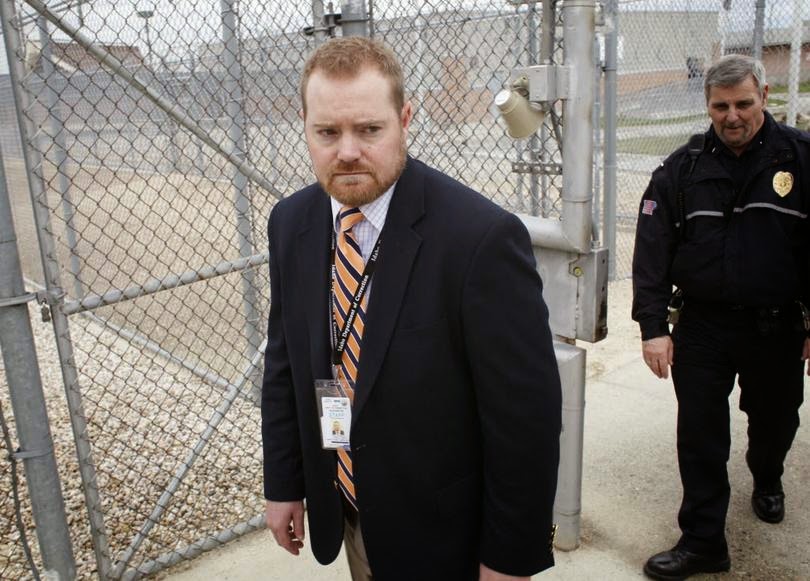
From gubernatorial protege to prison commissar: Protected felon Josh Tewalt.


Josh Tewalt
has a drug problem that led to several arrests. Like many others afflicted with that weakness, Tewalt eventually wound up in prison. Unlike most of them, however, he landed on the right side of the bars in the very lucrative position of Deputy Chief of Corrections for the State of Idaho. 

Without the dubious benefit of a college degree or substantial experience in law enforcement apart from his own time in jail, Tewalt receives a base salary of at least $83,000 a year to manage the human inventory of Idaho’s prison-industrial complex

Under Idaho’s state code, Tewalt’s repeated DUIs constituted an aggregate felony. Many – perhaps most – of the people whose lives he now controls committed offenses less serious than his. More than a few of them were convicted of felonies under Idaho’s pre-medieval laws against marijuana possession. The inmate population over which Tewalt presides may soon include desperate parents of children suffering from conditions for which non-intoxicating cannabis oil (CBD) is the only effective treatment.

A tippler, rather than a toker: Governor Otter.
On April 16, Idaho Governor Butch Otter vetoed a measure (S1146a) that would not have decriminalized possession and use of CBD, but would have created an “affirmative defense” for those who obtain and use it for treatment of several medical conditions, including cancer, amyotrophic lateral sclerosis, and various kinds of seizure disorders. 

That bill did not recognize that marijuana use is a function of the unqualified right to self-ownership, which is the only morally sound perspective on the matter. It would have placed a modest impediment in the way of cynical people who make a subsidized living by punishing those who exercise that right. This would include parents who would not consume CBD, but administer it to their children. 

Natalie Stevens, who testified in favor of the bill before the Idaho Legislature, is among those who may face prosecution if they obtain CBD for medical treatment. Stevens’s 11-year-old daughter Marley suffers from Dravet’s Syndrome, an intractable form of epilepsy. The child first experienced seizures at four months of age, and they have steadily increased in severity.

Speaking on behalf of her family, Stevens explained that the prospect of imprisonment is easier to contemplate than the continuing spectacle of her child’s unrelieved suffering. She told the legislators that she wants to follow the law, but is willing to do anything for her child. 

“Seizures are our prison,” Stevens explained. “We’ll gladly risk this. We’re already in prison. We would rather be arrested [for possession of CBD and have an affirmative defense.”
Arrayed against Stevens and many other suffering children and their anguished parents were the crème de la scum of Idaho’s entitled punitive class – police chiefs, sheriffs, prosecutors, and Elisha Figueroa, director of the Idaho Office of Drug Policy. 

Drug Czarina Figueroa.
These people, and their comrades, are determined to abduct and prosecute any Idaho resident who obtains and uses CBD. Enactment of S1146a would not have deprived them of that opportunity. Police who find people in possession of CBD would still be able to seize and “forfeit” cash, cars, and other property even before charges are filed, and prosecutors could still seek to extort plea bargains from financially straitened and over-matched defendants. 

The only significant difference is that those prosecuted for CBD possession would have a legally recognized affirmative defense, and thus a legitimate prospect of victory in a jury trial. Those who operate Idaho’s carceral apparatus simply couldn’t countenance a slight reduction in the prohibitive advantage they enjoy in seeking to cage someone for making unauthorized use of a benign mood-altering substance. In this case, the prohibited substance is a cannabis derivative has no measurable psychoactive properties. It is banned for ritualistic reasons, not substantive ones: The high priests of prohibition have decreed that we must avoid even the appearance of “evil.”

State-imposed taboos must be sustained through exceptionally vicious applications of state power. The superstition called marijuana prohibition is dying, and in its final convulsions those who act in its name are seeking to wring whatever residual trickle of misery they can out of the unbelievers– including children stricken with untreatable diseases and the parents who would give anything, their lives included, to relieve that suffering. 

Adherents of the Prohibition cult earnestly believe that the individual, as the property of the state, can be punished for consuming a substance without the explicit permission of those who act on its behalf.

In his veto message, Otter – in a gesture of regal condescension akin to Xerxes extending his scepter to Esther – included an executive order creating a small, carefully controlled experimental “access program” for a limited number of sick children. Under invasive scrutiny by the Idaho Department of Health and Welfare, they will be allowed to act as guinea pigs in tests of an FDA-approved product called Epidiolex ®, a form of refined cannabis oil produced by GW Pharmaceuticals

Legalizing the “limited use of cannabidiol oil … contrary to federal law” would be entirely inappropriate, Otter insisted in his veto message, since this approach would supposedly be rife with “misuse and abuse with criminal intent.” Which is to say, recognizing the innate right of people to cultivate and use marijuana would allow them to escape the clutches of “regulatory capture” – in this case, by pharmaceutical corporations working in alliance with the federal government. 

This is how an actual “drug cartel” works. 

Where the right to use marijuana is recognized, abuses can occur. The same is true of alcohol, a legal and immeasurably more destructive drug – something Otter can certify on the basis of personal experience. 

 As Lieutenant Governor 23 years ago, Otter was arrested for a DUI, and served a year of probation as a result. When stopped by a Meridian police officer, Otter initially said that his vehicle swerved because of a knee injury. He later explained to a jury that he failed a field sobriety test because, in his hunger following an eight-mile run, he had soaked chewing tobacco in Jack Daniels – an explanation that actually enhances, rather than diminishes, concerns about potential issues of addiction. 

Otter has plenty of company in the Olympian realm in which dwells Idaho’s political elite. This includes Deputy Corrections Director Josh Tewalt, who will be the custodial master of any Idaho residents who seek effective medical treatment with CBD in defiance of what Otter and his ilk insist on calling the “law.” 

In 1999, less than two years after graduating from High School, Tewalt was hired as a staffer by Governor Dirk Kempthorne. Two years later he was employed by then-Representative Butch Otter. While on Otter’s staff Tewalt was arrested for DUI. 

Although he resigned from Otter’s staff following a second DUI arrest in 2005, he benefitted from the kind of leniency granted only to the powerful and well-connected: The charge was reduced to inattentive driving. This spared Tewalt a mandatory one-year license suspension, compulsory installation of an ignition interlock system, and a possible one-year prison sentence.  Most importantly, the amended charge saved him from a felony when he was arrested for his third DUI just a few months later.
 
Prison master: Reinke.
Since his record didn’t bear the indelible stain of a felony, Tewalt was able to get a job with the Idaho Cattle Association, eventually rising to the position of executive vice president. This brought him into contact, once again, with Butch Otter, who had been elected governor. Tewalt was appointed by Otter to serve as a legislative analyst in 2008. The following year, Otter officiated at Tewalt’s wedding, where he met Brent Reinke, Director of the Department of Corrections. Reinke hired Otter’s protégé to be his deputy in 2011. This belated wedding gift by one crony to another entailed a $40,000 dollar raise.

Tewalt was brought on board to be a “change agent,” insisted Reinke, someone who can “learn our system and challenge our practices.” Tewalt proved to be an apt pupil, and an indifferent revolutionary; with his help, Idaho’s prison-industrial complex has prospered.

Idaho currently has the second-fastest growing prison population in the Soyuz. Over the next four years, prison construction and maintenance are expected to cost $300 million in funds plundered from the state’s tax victims. On average, the amount of time served by drug offenders – that is to say, political prisoners – is double the national average. Owing to an unusually prehensile parole system, Idaho has an exceptionally high rate of recidivism, and it’s not uncommon for prisoners to serve 200 percent of their “fixed” sentences. 

Tewalt’s stewardship includes the Juvenile Corrections Center in Nampa, where more than a dozen child inmates – including some who were mentally handicapped or on psychiatric medication -- were molested or otherwise abused by guards and staffers. A federal audit conducted under the Prison Rape Elimination Act certified that the “problems” in that facility have been rectified. This came as a surprise to some of the personnel cited in the report, who told the Idaho Press-Tribune that the federal investigator never bothered to interview them. 


The “system” Tewalt learned under Reike’s tutelage was one in which some inmates at the Idaho Correctional Center – a state prison operated by the Nashville-based Corrections Corporation of America (CCA) – were routinely beaten and abused by prison gangs under the indifferent supervision of the staff. In 2010, several inmates filed lawsuits (which were later consolidated into a class-action case) alleging that the CCA-run facility was known as a “Gladiator School.” 

Shortly before Tewalt was hired in 2011, a federal judge imposed a consent decree requiring a number of reforms in the administration of the prison. The CCA responded by falsifying at least 5,000 hours of employee records to certify that it had maintained minimum staffing requirements. When news of this misconduct went public, CCA filed for a protective order seeking to preserve the opacity of its administrative practices. The corporation was found in contempt of court – but was allowed to finish out its contract with the state, which expired last year. 

“We have delivered exceptional value to Idaho’s taxpayers through cost savings, and we’ve also provided outstanding rehabilitation programming to the inmates entrusted to our care,” boasted CCA Vice President Brad Regens after the company decided not to bid on a follow-up contract. While that statement is a lie, it must be admitted, in all fairness, that this public-private partnership -- which is, by strict definition, an application of fascism -- offered "exceptional value" to the CCA's shareholders and executive-level employees.

 Tim Wengler, the Idaho Correctional Center’s warden, was allowed to retire at age 46 – after firing former chief of security Shane Jeppsen, who says he warned Wengler about the abuses in 2010. Retaliation against whistleblowers continues to be a feature, rather than a glitch, in the prison system Tewalt manages. Diana Canfield, a former mental health clinician at the formerly CCA-run prison, was fired after complaining to her supervisor about the destruction or alteration of inmates’ medical records

Many, if not most, of the people consigned to live in Josh Tewalt’s domain are imprisoned because of vices, rather than crimes. But it’s difficult to imagine anything more vicious than Butch Otter’s willingness to imprison virtuous parents whose only “offense” is to use cannabis oil to treat their incurably sick children.


If you can, please donate to help keep Pro Libertate online. Thank you so much! 


Dum spiro, pugno! 


Monday, April 13, 2015

Apparently, the Fantasy Cop Package Doesn't Include "Qualified Immunity"


Note: This essay has been updated to reflect the criminal charge against Robert Bates.

Some wealthy men of a certain age pay an extravagant fee to attend fantasy camps where they can pretend to be Major League Baseball players, or engage in brief jam sessions with patient and well-compensated classic rock performers. Others take part in “canned hunts” in which the prey are penned in and sometimes specially bred to be helpless.

Tulsa insurance executive Robert Bates bought the full Fantasy Cop package – but it was Eric Harris who paid the premium when Bates fatally shot him following an undercover “sting” operation on April 9. He now faces a second-degree manslaughter charge.


Since 2008, Bates, who spent a single inglorious year as a police officer more than five decades ago, has been enrolled as a “reserve deputy” with the Tulsa County Sheriff’s Office. During the altercation on April 9, Bates apparently mistook his handgun for a Taser. 

Unlike the “real” peace officers on the scene, Bates’ first impulse was to apologize as his victim’s life ebbed away. That apology was probably directed not at the victim, but at the reserve deputy’s steroid-enhanced and tattooed comrades – one of whom was kneeling on the back of the victim’s head. They probably didn’t notice, given that they were too busy taunting the dying man.

“You f***g ran! … F**k your breath!” snarled one of the privileged simians in the Tulsa Violent Crimes Task Force. He might not have been aware that Harris had endured a fatal gunshot wound. In any case, he almost certainly didn’t care. It is entirely illegal for police to kill fleeing, unarmed suspect because he ran. It is also quite commonplace. This helps explain why it was that in the month of March – by one calculation – American police shot a greater number of suspects than British police did during the entire 20th Century. 

"Deputy" Bates and his victim.
If one of the full-time deputies had fired the fatal shot, the assailant would enjoy “qualified immunity” relieving him of civil liability and protecting him from criminal prosecution. Apparently, “qualified immunity” doesn't come with the Fantasy Cop Package that Bates purchased through his donations. Major Shannon Clark of the TCSO told the Tulsa World that “There are lots of wealthy people in the reserve program. Many of them make donations of items. That’s not unusual at all.”

In the seven years since he became a reserve deputy, Bates has donated firearms, stun guns, and several vehicles to the department. Without disclosing details of his training and qualifications, the TCSO lists Bates as an “advanced reserve,” in which position he was entitled to “do anything a full-time deputy can do” – except, apparently, the ability to absolve himself of legal accountability by invoking “qualified immunity.”

The selling point for the TCSO’s donor program is status, not service. This reflects the fact that, as I’ve noted before, law enforcement defines its role in terms of what police can do to people, rather than what they are required to do on their behalf.   

This sense of being elevated above the common herd offers a compelling appeal to the libido dominandi, and that allure explains why wealthy people and celebrities – such as Shaquille O’Neal, Steven Segal, and Ted Nugent – become dilettante cops. Both O’Neal and Segal participated in botched SWAT raids, which apparently is one of the perks of a celebrity buy-in. 

Furthermore, in some jurisdictions that exalted status is literally given away.


“Many assume police officers are rigorously trained before being allowed to patrol the streets,” observes the Shreveport Times. “But drive through rural Louisiana and it’s possible to be stopped by a law enforcement officer who’s never experienced a day of police academy and instruction on use of force, stressful scenarios and physical fitness that comes with it. Sometimes, an eight-hour firearms training and on-the-job guidance is all an officer gets before starting work as a salaried, gun-toting, arrest-making officer.”

Louisiana’s state law allows municipal political cliques (sometimes called “city governments”) to hire and deploy armed collection and abduction specialists (otherwise known as  “full-time sworn officers”)  and keep them on the payroll for up to a year before they become certified police officers. Some departments “simply violate the law, sometimes failing to send full-time officers to the academy,” according to Kenny Saunders, who teaches at a state-certified academy.

Motorists in rural Louisiana run an appreciable risk of being detained, harassed, or otherwise abused by a costumed stranger whose official status as a police officer is akin to that of Eric Cartman.

Let it not be thought, however, that this is a problem that can be solved by making certification standards more rigorous. A state-certified purveyor of aggressive force is just as dangerous to innocent people as one whose credentials aren’t in order, assuming that both can take refuge within the spurious doctrine of “qualified immunity.”


There are anywhere from three to five times as many private security officers – such as armed guards, private investigators, and armored car drivers -- in the United States as “sworn law enforcement officers.” A private peace officer who kills or injures an innocent person is not protected by “qualified immunity.” 

While a police officer has no enforceable duty to protect an innocent person from harm, a private security operative who fails to carry out his contractual duty of care might be liable to a civil action, and will certainly be punished in the marketplace.

In Idaho, it is possible to become a private investigator simply by advertising one’s services. If clients are willing to pay you to ask questions, or an established detective agency is interested hiring you to conduct surveillance or file public records requests,  you can call yourself a private investigator – with the understanding that you are fully liable if you are charged with a crime or hit with a lawsuit.

At present, only six cities in Idaho (interestingly, Boise is not one of them) impose a licensing requirement for private investigators. Although there is no state licensing requirement, the Private Investigators Association of Idaho (PIAI) has introduced a “Certified Private Investigator” program intended to establish professional standards in the industry.

The first requirement to become a CPI would be to carry, and maintain, at least $500,000 in errors and omissions or general liability insurance.

“Anybody looking to hire a reputable and reliable investigator should require him to have at least a half-million in liability insurance,” PIAI President Dan Landis told me in a telephone interview. “If someone gets hurt through an act or oversight, or gets arrested for the wrong reason, the investigator needs to be covered.”

Every day, police injure and kill people through bad acts or culpable omissions, and arrest people without legitimate cause – and those responsible generally suffer no personal consequences because of their supposed authority. Police are not required to carry personal liability insurance to cover such contingencies. On those rare occasions when fault is found, the financial consequences are socialized, which means that they are ultimately absorbed by the tax victims within a given political jurisdiction.

Private investigators, like other private peace officers, are not afforded that corrupt luxury. This is why the PIAI’s minimum standards for certification are more demanding that those that must be met for police applicants in many municipalities.

Applicants cannot have a criminal record of any kind. They must be bonded and pass a deep and extensive background check.  Although there is no private investigators’ academy, applicants must have “a minimum of 500 hours (verifiable) experience in the field of `private investigations.’”

Significantly, “Law enforcement, government or military experience does not qualify as `private investigations.’”

“Being ex-law enforcement doesn’t mean a thing,” Landis contends, because a police officer, in the final analysis, is merely an individual with “a gun, a badge, and a suit.”

The totems of government “authority” protect those who carry them from the legal consequences of using aggressive force. They do not confer the acumen, character, or persistence necessary to uncover facts and build a case. 

Once a cop, he became a peace officer: Spenser (r., with Hawk).
Even without formal, albeit non-governmental, certification, private investigators – unlike government-employed enforcers -- cannot succeed without producing results.

When a burglary is committed, the victim doesn’t have the option of choosing the most competent police agency (assuming one exists) to investigate the crime; he or she must be content with the “service” offered by the department claiming a local franchise within the government’s coercion cartel. Because it operates as part of a monopoly, the police department can’t go out of business, and it treats customer dissatisfaction as an “officer safety” issue rather than a reason to improve its job performance.

This helps explain why, in a country where the government confiscates billions of dollars each year in the name of “public safety,” citizens probably spend at least that much more to pay for protection of persons and property, or to investigate crimes against them – services that are supposedly provided through the state’s security monopoly.

If Robert Bates had been interested in protecting persons and property, he would have invested in a private security firm.  He preferred the power, prestige, and privilege that come with being part of the state’s coercive caste. Under the abysmal standards governing that profession, Bates may have considered himself immune to the consequences of committing negligent homicide. 

After all, every law enforcement officer is impersonating a peace officer – so why should Bates be singled out for exemplary punishment? 


If you can, please donate to help keep Pro Libertate on-line. Thank you, and God bless! 


Dum spiro, pugno! 


Thursday, April 9, 2015

Michael Thomas Slager: Vocational Sociopath


Solidarity, not skepticism: Patrolman Slager's supervisor comforts the killer as the victim's life ebbs away.


As many have said, were it not for the video, Michael Thomas Slager would have been quickly exonerated – and, most likely, received a commendation – for the killing of Walter Scott. The most remarkable aspect of that video, however, is not the unbearable spectacle of the shooting itself, but rather the composed, almost clinical way that Slager executes the victim, and the ease with which he makes the transition from the killing to the cover-up.

Slager’s body language while drawing and firing his gun suggested annoyance, rather than urgency. He never bothered to render aid to Scott, choosing instead to handcuff the dying man – fortifying the pretense that the unarmed man who had fled in terror had been a threat to him.  Although Slager had sauntered over to examine and truss his victim, he sprinted – well, waddled vigorously – back to the scene of the previous altercation. He retrieved his Taser and then deposited it next to Scott’s bullet-ridden body.

In doing so, Slager tampered with evidence in a crime scene. The patrolman did this casually, in full view of a second police officer, acting in the serene confidence that he would not be required to explain or justify his actions beyond recitation of the familiar formula: “He resisted arrest, he made an aggressive move for my Taser, I feared for my safety and had no choice but to use lethal force.”

A variation on this approach had worked for Slager following an excessive force complaint for using his Taser on an unarmed, unresisting man who was arrested in his own home without cause or explanation. That incident, significantly, was not video-recorded, and no other witnesses were available to contradict the typically mendacious account inscribed by Slager in his official report. Following a review process designed to vindicate the actions of its officers, the North Charleston PD ruled that Slager’s aggravated assault was “justified.”

The same result would have been achieved in the murder of Walter Scott were it not for the presence of a young man equipped with a cellphone and armed with exceptional courage and presence of mind. That complication is the only reason why this incident deviated from the long-established script. 

If not for the video, this shooting -- like all other officer-involved shootings – would never have been investigated as a potential criminal homicide, but rather as an “assault on law enforcement.” From that perspective, Scott was identified as the suspect, and Slager as the victim. 

The immediate priority for the first “investigator” on the scene was to see to the welfare of the assailant, and to reassure him that he had done the right thing. This explains why the “investigating” officer, rather than confronting the shooter, placed a comforting, collegial hand on his shoulder. The supervisor remained in that posture as Slager recited the first draft of what would have been codified as official “truth” – if Feidin Santana hadn’t happened upon the scene while he was on his way to his job in the productive sector.

Addressing the media after Slager was charged with murder, North Charleston PD Chief Eddie Driggers described himself as “sickened by what he saw” in the Santana’s video. Driggers was appointed to the post three years ago after serving as a law enforcement chaplain. His appointment was made by Mayor Keith Summey without a vetting process of any kind. According to the mayor, Diggers was the obvious choice because of his “experience in law enforcement” and the fact that “a lot of my officers know him, like him and respect him.”
 
Chief Driggers (r) with Mayor Summey.
His ministry as senior deputy chaplain with the Coastal Crisis Chaplaincy was “to provide pastoral care and counseling for employees and families of first responders” and assisting “the Mobile Crisis Unit and SWAT teams” in various circumstances. 

The group’s “Chaplaincy Log” is replete with mentions of ministerial visits and counseling sessions with “first responders,” local police, FBI agents, the Coast Guard, and other members of the State’s enforcement caste. There is the occasional mention of a pastoral visit to a “civilian” in need of comfort, but they are very much the exception. The ministry is overwhelmingly devoted to the needs of the State’s emissaries of official violence, rather than addressing the concerns of the public supposedly served by them.

Driggers spent 35 years as a police officer – including a SWAT operator -- before becoming a chaplain in 2008. When he left that ministry to become North Charleston Police Chief, his place was filled by Harry Sewell, who had just retired as police chief in Charleston.
Given Driggers’ background, and that of the ministry in which he was involved, it’s a reasonable surmise that he was devoted to the Gospel of Authority, so memorably expounded by the Rev. Franklin Graham in a recent Facebook post:


“Listen up, blacks, whites, Latinos, and everybody else. Most police shootings can be avoided. It comes down to respect for authority and obedience. If a police officer tells you to stop, you stop. If a police officer tells you to put your hands in the air, you put your hands in the air…. It’s as simple as that. Even if you think the police officer is wrong – YOU OBEY. Parents, teach your children to respect and obey those in authority.”

Instant, unqualified obedience to police is necessary, Franklin insists, because “The Bible says to submit to your leaders and those in authority `because they keep watch over you as those who must give an account.’”

Franklin has elsewhere declaimed against Islamic law as if he were an expert. The deficiency he displays in expounding Romans 13 should govern assessments of his competence in interpreting scriptures from other religious traditions. 

While there’s no way to know if Slager – who, like his victim, had served in the Coast Guard  -- had been catechized in that view of Romans 13, he clearly acted on the same assumptions regarding authority and the propriety of summary execution as punishment for Mundanes who do not render the required tribute of immediate submission. The same assumptions were evinced by the studied lack of curiosity on the part of Slager’s comrades at the crime scene, and the readiness with which his supervisors retailed the killer’s fiction to the public. 

The killing of Walter Scott “is not reflective of this entire police department,” Driggers maintains. “One does not throw a blanket across the many.”


This was an oddly appropriate choice of metaphor, given that a blanket is used to cover something up. Feiden Santana – who, unlike Slagle, did legitimately fear for his life – saw the blanket being pulled over the incident and at considerable personal risk made the evidence available to the victim’s family. Once again: This is the only reason why Slager was fired and charged with murder, rather than being exonerated and most likely given a promotion. 

Michael Slager’s appearance is that of the clean-cut, all-American family man. His professional behavior was that of a privileged sociopath, which is to be expected: Police officers are vocational sociopaths.

A sociopath, as the term was defined upon its introduction in 1930, is someone who displays a “disposition to violate social norms of behavior” through “deceitfulness … impulsivity … irritability and aggressiveness … [a] reckless disregard for safety of self or others,” and a “lack of remorse, as indicated by being indifferent to or rationalizing having hurt, mistreated, or stolen from another.”

Law enforcers – as opposed to peace officers, especially private security operatives – have official permission to employ aggressive violence and escalate it to lethal levels if they meet resistance. They are clothed in “qualified immunity” that protects them from accountability and liability for committing acts that would otherwise result in prosecution. As noted above, when they kill someone, police officers are immediately designated the victim, and the decedent is assumed to be the perpetrator. 

Owing to the nature of the job – at least as it’s presently defined – law enforcement selects for sociopathic personalities, and it is an occupation perfectly calibrated to create “secondary sociopaths” – that is, “those who become antisocial because of environmental factors.”

In their significant study “The Sociopathic Police Personality: Is It a Product of the `Rotten Apple’ or the `Rotten Barrel?’” (Journal of Police and Criminal Psychology, Vol. 14 Number 1), Catherine Griffin and Jim Ruiz of Westfield State College observe: “The environment in which police officers work offers unlimited opportunities for corruption and deceit, and these environmental factors may lead to sociopathic behavior.”

“The extent to which police officers may abuse their authority seems limitless as does the extent fellow officers will go to protect each other,” they continue. “The loyalty and `brotherhood’ of the police that appeals to so many has caused many officers to neglect their primary duty: to protect and serve.”

Dangling at the end of that sentence is an unspecified direct object: To protect and serve what, or whom? The “primary duty” of police is to their “brotherhood,” not the public at large, Griffin and Ruiz explain, because “as time goes by, police begin to view the public as their enemies and this causes their antisocial behavior to increase.”

Police “work” acts as a reverse alembic, refining the worst personality elements of those who engage in it. In his 1988 study “Personality Characteristics of Supercops and Habitual Criminals” (Journal of Police Science and Administration, Vol. 16, pp. 163-167), G.C. Reming found that the behavioral characteristics of police officers who “distinguish themselves by their sustained high productivity” – as measured in self-initiated felony arrests – were indistinguishable from those found among habitual criminals. 

This should surprise nobody: Both of those groups consist of people who consider themselves licensed to use aggressive violence and selectively exempt from the laws governing lesser people. 

Slager wasn’t a “supercop”; he was a perfectly ordinary patrol officer behaving in accordance with the professional standards of the department that employed him. His was the routine, everyday sociopathy of contemporary law enforcement.


If you can, please donate to help keep Pro Libertate online. Thank you so much! 


Dum spiro, pugno!