
 |
| (Apologies to Emerson) Beneath the rude bridge that arched the wash, their flag to April's breeze unfurled: Victory at Bunkerville, 2014. |
What happened at Lexington and Concord, Massachusetts on April 19, 1775 was an eruption of terrorist violence against the forces of order and decency, insisted Peter Oliver, a former Massachusetts Bay Superior Court Judge. His history of the American rebellion was published in 1781, but it has an oddly contemporary flavor – almost as if it had been published by an 18th Century analogue of the so-called Southern Poverty Law Center.
General Gage, “having intelligence that a quantity of
warlike stores were collected at Concord … judged it most prudent to seize them,”
Oliver narrated. The troops acted with efficient professionalism, only to find
themselves under assault by an organized band of gunmen determined to resist
the enforcement of lawful orders.
“Much stress hath been laid upon [the question of] who fired
the first gun,” observed Oliver of the engagement on
Lexington Green. “This was immaterial, for … the military Power had a right
to suppress all hostile appearances. But in the present case, the commanding
officer ordered the armed Rabble to disperse, upon which some of the armed
Rabble returned an answer from their loaded muskets.”
The “Rabble” compounded that impudence with tactics Oliver
regarded as dishonorable, sniping at the troops “from houses and from behind
hedges, trees, and stone walls” and otherwise concealing themselves against
reprisal. The beleaguered British retreated, yet the “battle thickened upon
them … for every town, which they passed through, increased the numbers of
their enemies, so that they had not less than 10 or 12,000 to combat with in
the course of the day.”
 |
| Peter Oliver |
Not being able to boast of a victory, the arch-Tory took
solace in what he described as “the instances of the British soldiers’ great
humanity, in protecting the aged, the women and the children from injury,
notwithstanding the great provocation they had to a general slaughter.” The
Redcoats were entitled to exact a horrible price in blood, Oliver contended,
but they displayed heroic forbearance by refusing to do so.
Instead of chastened gratitude for the magnanimity of their
armed overlords, the American rebels circulated accounts that Oliver denounced
as “atrocious falsehoods” intended to “inspirt the people to the grossest acts
of violence.” This led directly to further “barbarities” committed “by
Washington and his savages” against the British troops and their contract
mercenaries, who embodied the sanctified will of the Sovereign.
After diving into the
mendacious artifact that Daniel G. Bogden, the US Attorney for Nevada, calls an
“indictment” against Cliven Bundy and eighteen of his relatives and associates,
it’s a good idea to read some excerpts of Oliver’s very similar treatment of
the American revolt as a way to decompress. Abruptly rising to reality after
plumbing the depths of Bogden’s dishonesty might otherwise lead to the
intellectual equivalent of the bends. The rodentiform Bogden is a jurist in
Oliver’s tradition, a servile instrument of enthroned corruption.
The document Bogden extracted from a typically pliable
federal grand jury refers to the April 12, 2014 standoff in Bunkerville Nevada
as “a massive armed assault against federal law enforcement officers,” a
discreditable description of an incident in which not a single shot was fired
by either side. Indeed, the presence of several hundred witnesses, most of whom
were “armed” only with cameras or protest signs, prevented mass bloodshed by agents of a Regime that does not
scruple to kill helpless people.
The rebellion at Bunkerville, a genuinely inspiring act of
peaceful rebellion against decades of criminal
misconduct by the BLM and allied agencies, is depicted by Bogden as a “conspiracy”
against federal authority.
“Bundy and other leaders and organizers of the conspiracy …
used deceit and deception to recruit gunmen and other `Followers’ for the
purpose of using force, threats, and intimidation to stop the impoundment [that
is, the rustling of Bundy’s cattle], flooding the internet with false and
deceitful images that law enforcement officers were abusing Bundy and stealing
his cattle,” whines Bogden. “Deliberately lying, the leaders and organizers
pleaded for gunmen and others to travel to Nevada to `stop the abuse’ by
`making a show of force against [the officers]’ in order `to get them to back
down’ and `return the cattle.’”
 |
| Bogden |
By the morning of April 12, continues Bogden’s petulant
recital, “hundreds of people, including gunmen armed with assault rifles and
other firearms, had traveled to Bunkerville, becoming Bundy’s `Followers’
conspiring with, and aiding and abetting him, and the other leaders and
organizers, to execute a plan to recover Bundy’s cattle by force, threats, and
intimidation.”
Oliver depicted the Redcoats as hapless victims of “savages”
who sniped at them from behind cover and exposed them to withering ridicule. In
less elevated diction, Bogden offers the same complaint, protesting that the
federal Berserkers were “met with angry taunts” from the demonstrators, who “demanded
the release of Bundy’s cattle.” Meanwhile, he claimed, some of the protesters could
be seen “bobbing up and down behind the concrete barriers that bordered the
northbound I-15 bridge, indicating to the officers that the gunmen were acquiring,
and determining the range to, their officer-targets.”
Nowhere in the indictment is mention made of the fact,
attested by several witnesses and participants, that the Feds had broadcast a
warning that they were authorized to use deadly force. They were, in other
words, willing to kill people in order to keep the pilfered cattle – not because
of their value, but as a tangible display of federal “authority” over lands to
which they
are not constitutionally entitled.
Retired Judge Andrew Napolitano, one of the few
representatives of that profession who understands and cherishes the rule of
law, points
out that if the Feds had been seeking to validate a legitimate claim to
unpaid grazing fees they would have placed a lien on Bundy’s ranch, rather than
dispatching a cadre of contract rustlers defended by a company of armor-clad,
M16-toting Brownshirts.
Just as Peter Oliver did in 1781, Bogden and his comrades want the public to see the BLM's decision not to slaughter people en masse as an act of nobility. In a supplemental filing against Hailey, Idaho resident Eric J. Parker, whose over-watch helped deter a massacre, Bogden's comrade Justin Whatcott invites the public to pretend that if not "for the courage of the victim officers to back away from their assaulters and abandon the cattle, the actions of Parker and his co-conspirators would have resulted in catastrophic death or injury to the officers and others."
 |
| Holding the robbers at bay: Eric Parker in Bunkerville. |
Unlike other bullies, the federal government has the luxury of prosecuting victims who force them to back down -- and this butt-hurt bully won't be satisfied with the nineteen rebels it has rounded up. Under the terms of this indictment, anybody who was present
in Bunkerville that morning, irrespective of his or her role in that incident,
is liable to prosecution as part of that “conspiracy.” This is also true of
those who arrived after the standoff in support of Bundy; such people are
described in the indictment as “co-conspirators” in the effort to “protect his
cattle from future removal actions” and to “deter and prevent any future law
enforcement actions….”
The indictment could
actually be expanded to include reporters (your
correspondent among them) who published
accounts of the standoff that do not comport with the
Regime’s official version of the event. Statist media courtesans like Sean
Hannity and Glenn Beck, who praised Bundy for his resolute defiance of the BLM until
the predictable campaign of demonization began, will be granted absolution for their
subsequent denunciations of the rancher as a “racist.”
Although consistently described as a “scofflaw” and “deadbeat,”
Cliven Bundy has never refused to pay grazing fees. He has repeatedly offered
to pay those fees to Clark County, rather than to the federal agencies who have
usurped control over lands within the county. Like other embattled ranchers
throughout the intermountain region, Bundy is demanding that the central
government end its illicit control over rural lands in the western states. Confronting
a lawless federal government that considers its powers to be illimitable,
Bundy, along with his sons and associates, chose the course of interposition.
To minds rendered inoperable through decades of collectivist
indoctrination, those views seem presumptuous, and Bundy’s effort to defend his
property seems an impermissible act of armed sedition. Those with a sense of American history might be
reminded of the Suffolk
Resolves of 1774, in which James Warren, Paul Revere, and similarly
disreputable anti-government radicals acted to nullify the unlawful Coercive Acts
– and threatened to arrest any British official seeking to enforce them.
The thirteenth “resolve” warned General Gage that the Rebels were aware of a plan “to apprehend sundry persons of this county, who have rendered themselves conspicuous in contending for the violated rights and liberties of their countrymen….” In the event soldiers were dispatched to carry out that design, the Rebels were prepared “to seize and keep in safe custody, every servant of the present tyrannical and unconstitutional government throughout the county and province, until the persons so apprehended be liberated from the hands of our adversaries, and restored safe and uninjured to their respective friends and families.”
The thirteenth “resolve” warned General Gage that the Rebels were aware of a plan “to apprehend sundry persons of this county, who have rendered themselves conspicuous in contending for the violated rights and liberties of their countrymen….” In the event soldiers were dispatched to carry out that design, the Rebels were prepared “to seize and keep in safe custody, every servant of the present tyrannical and unconstitutional government throughout the county and province, until the persons so apprehended be liberated from the hands of our adversaries, and restored safe and uninjured to their respective friends and families.”
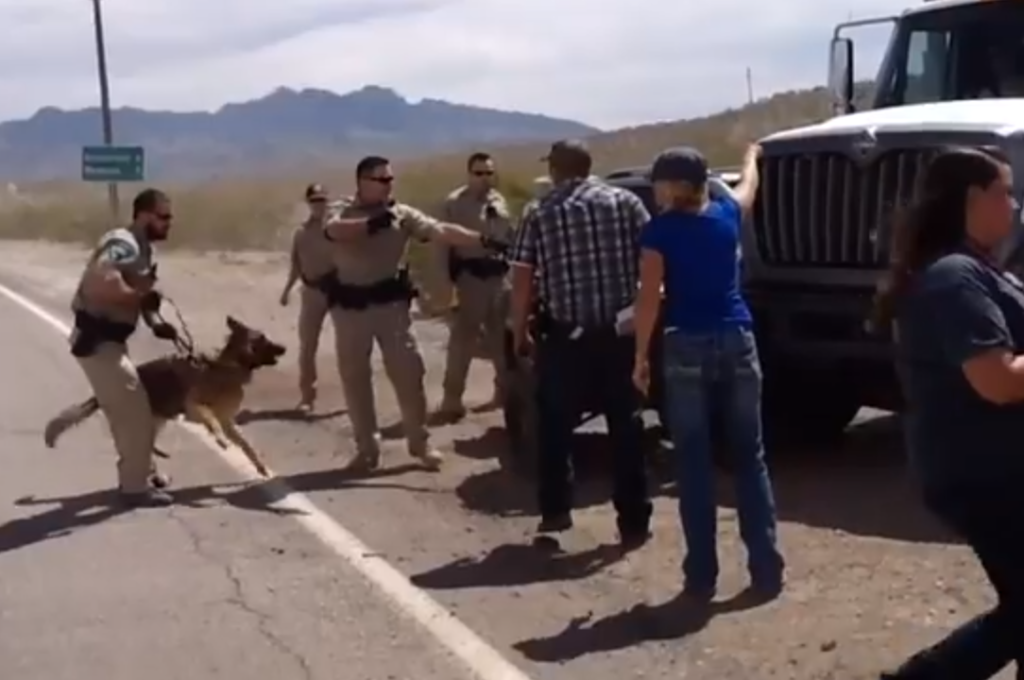 |
| BLM Brownshirts in action |
Bogden’s indictment describes the “armed checkpoints and
security patrols” established on Bundy’s property as a supposedly criminal
effort “to prevent and deter law enforcement actions against the conspirators….”
Those actions are morally and, yes, legally indistinguishable from the actions taken by the Patriots in and around Boston during the early 1770s: Under the “laws” in place at the time, and as seen by people of Bogden’s ilk, the actions of Samuel Adams and his cohorts constituted a criminal conspiracy that culminated in bloodshed. It was that “conspiracy” that led to the formation of the government that provides Bogden with his plunder-derived paycheck.
Those actions are morally and, yes, legally indistinguishable from the actions taken by the Patriots in and around Boston during the early 1770s: Under the “laws” in place at the time, and as seen by people of Bogden’s ilk, the actions of Samuel Adams and his cohorts constituted a criminal conspiracy that culminated in bloodshed. It was that “conspiracy” that led to the formation of the government that provides Bogden with his plunder-derived paycheck.
A case can be made that Bundy and his associates have been
more restrained than their noble forebears in colonial Massachusetts; after
all, at Bunkerville, once the servants of “the present tyrannical and
unconstitutional government” had been forced to return the stolen property and
leave the scene, no effort was made to arrest them for their crimes.
Referring to the BLM’s conduct as criminal is not hyperbole:
The same U.S. District Court before which Bundy and his colleagues would be
tried has ruled that the agency has engaged in a criminal conspiracy against
the rights of Nevada ranchers for at least the last two decades. U.S. District
Judge Robert E. Jones, in a May 2013 ruling, described the BLM’s campaign of harassment,
malicious prosecution, trespass, theft, and extortion against the late Wayne Hage and his family.
In 1993, Hage, a
prominent rancher and land rights advocate, applied for a federal grazing
permit while explicitly reserving his rights.
Hage had every reason to suspect the Feds of dishonesty: During the
first Bush administration, the Forest Service, which administered lands owned
outright by Hage, arbitrarily ordered him to reduce the number of cows on the
allotment, claiming – without evidence – that the land had been overgrazed.
When Hage refused, the Feds stole 104 head of his cattle in
an armed reprisal raid. Hage’s grazing permit was revoked and the Forest
Service issued an order forbidding him to remove trees that had obstructed his
right-of-way – timber that had previously been described as a “nuisance” by the
same agency. This led to a spurious – and ultimately dismissed – charge of “destruction
of government property.” Four months before that charge was lodged against him,
significantly, Hage had filed a lawsuit against the Feds, accusing them of an
unconstitutional “taking” of his property.
Given this backstory, it’s hardly surprising that as Hage
signed his grazing permit application, he added a notation explicitly reserving
his rights. This led to what Judge Jones calls the “nonsensical” federal claim
that “such an assertion of rights meant that the application had not been
properly completed.” That act was unlawful, Jones ruled, given that “the
Government cannot withdraw [grazing rights] or refuse to renew them
vindictively or for reasons totally unrelated to the merits of the application….”
That act of bureaucratic malice in 1993 was a “due process
violation” that begat multiple criminal actions by the BLM.
 |
| Rest in God's Peace: The late Wayne Hage. |
While the Hages, at considerable expense, pursued their
grievances against the Government in court, the BLM filed specious water rights
claims on the family’s land, sought to entice several of their neighbors to steal
water rights that belonged to the Hages, and “issued trespass notices and
demands for payment against persons who had cattle pastured with Hage, despite
having been notified by these persons and Hage himself that Hage was
responsible for these cattle….”
As if the BLM’s intentions weren’t sufficiently transparent,
the BLM “sent trespass notices to people who leased or sold cattle to the
Hages, notwithstanding the Hages’ admitted and known control over that cattle,
in order to pressure other parties not to do business with the Hages, and
even to discourage or punish testimony” in the family’s ongoing lawsuit.
(Emphasis added.)
This was a full-spectrum criminal campaign by the BLM: Racketeering,
extortion, multiple instances of falsifying official documents, witness
tampering and intimidation, official retaliation – all of it carried out by
agencies capable of murdering the victims while shielded by official privilege.
Judge Jones, who had not exhibited any symptoms of “anti-government
extremism,” concluded that the BLM and other agencies “entered into a literal,intentional conspiracy to deprive the Hages not only of their permits but also
of their vested water rights.” Invoking the
critical legal threshold for a 14th Amendment suit, Judge Jones
observed that the BLM’s behavior “shocks the conscience of the Court,” held
several key officials in contempt of court, and “referred the matter to the
U.S. Attorney’s Office.”
The U.S. Attorney tasked by that order to deal with the BLM’s
criminal misconduct is Daniel G. Bogden, the same official seeking life
sentences against Cliven Bundy and his associates as punishment for their
successful effort to impede the BLM’s criminal designs. Rather than complying with that order, the Feds simply arranged for the dispute to be assigned to a more sympathetic judge. The willingness of Judge Jones to describe criminal misconduct in candid terms, insisted judicial commissarina Susan Graber, demonstrated that he "harbored animus toward the federal agencies" involved in the case.
"Thieves for their robbery have authority when judges steal themselves," observed the Bard in Measure for Measure. When robbers and rustlers have rigged the system, the only alternatives that remain are abject subjection or armed interposition. The impending Bunkerville show trial will be intended to cultivate submission. It will most likely produce the opposite result.
Obiter dicta
For the past several months I've been contributing articles at The Free Thought Project, an outlet whose work I've long respected. This provides my work with tremendous exposure, and provides me with gas money -- but it's not enough to support a family of eight. I have been approached about participating in a new media venture that sounds very promising -- but, as is so often the case, it still lingers just beyond the horizon.
I am always grateful for the help so many of you have provided, and right now we're really in need of whatever help you can provide. Thank you so much for your generosity.
This week's Freedom Zealot Podcast (now available on Stitcher Radio) also deals with the Regime's crackdown on the Bunkerville Rebels:
Dum spiro, pugno!


