Thursday, December 7, 2006

Brief Notes on the Criminal Racket called "Government"


"Everyone knows that the State claims and exercises [a] monopoly of crime ... and that it makes this monopoly as strict as it can. It forbids private murder, but itself organizes murder on a colossal scale. It punishes private theft, but itself lays unscrupulous hands on anything it wants, whether the property of citizen or of alien. There is, for example, no human right, natural or Constitutional, that we have not seen nullified by the United States Government. Of all the crimes that are committed for gain or revenge, there is not one that we have not seen it commit – murder, mayhem, arson, robbery, fraud, criminal collusion and connivance."

Albert Jay Nock, from Our Enemy, the State

Support Your Local Panopticon

When Davenport, Iowa joined the roster of cities with automated red light cameras several years ago, the City Council and Police Department soothingly assured the public that the cameras were intended as a revenue-neutral safety measure.

In addition to being notoriously unreliable, red light and speed cameras undermine public safety and their use as an enforcement mechanism is patently unconstitutional. They do bring in the bucks, however, which is why they are so popular with municipal governments. (Well, that and the bribes and kickbacks offered by some contractors involved in this corrupt criminal enterprise.)

The municipal government – which is to say, the criminal clique controlling Davenport -- now enjoys a $250,000 “windfall” harvested by their traffic control cameras, and is planning to plow the profits into building a local panopticon – a “citywide wireless network allowing police to view live streaming video from their squad cars,” reports the Quad-City Times. “In addition, the department will begin recording its captured video, allowing it to [be used] as evidence to prosecute crimes.”

Thus far, one camera mounted on a high-rise overlooking a busy city street has been used “in making arrests for prostitution, public consumption of alcohol and loitering,” which aren't the kinds of violent assaults on person and property most people envision when discussing the legitimate role of police.
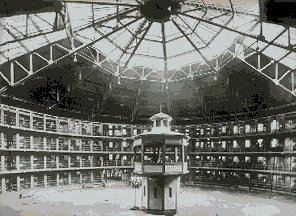
Here's one rendering of the "Panopticon" prison concept, as envisioned by utilitarian philosopher Jeremy Bentham...

During comments made to city Aldermen, Police Chief Mike Bladel “was careful not to reveal too much” about the “undisclosed number of portable and mobile cameras” that will be purchased with the money extorted from the public through the red light cameras.

“We really don't want to demonstrate to the public our full capabilities, but yes, it would be our goal to identify people from a long distance, and that is an achievable goal,” said Chief Bladel.

... and here's a more updated version of the Panopticon concept.


Why keep such details from the public, if Bladel and his department are there to “serve and protect” them? If the Davenport Police Department were actually carrying out the function of “peace officers,” they would want to be a conspicuous and welcome presence, rather than a furtive and hostile one. It's clear that Bladel's department has assimilated the Homeland Security mindset, in which protecting the State is the highest duty, and the people who are supposedly protected are treated as a pool of potential terrorists.

The Davenport P.D. Is “partnering” with Raytheon Company, one of the major contractors for the Homeland Security/Military Industrial Complex, to conduct a six-month trial of its panopticon system. After that, “the wireless network would have to be funded through the police department's regular budget.”

Which means, of course, that once the seed money has been consumed, the Davenport P.D. Will have to ramp up its efforts to shake down motorists in order to keep their surveillance system up and running.

Chances are they'll seek advice from their comrades in blue over in Iowa's Dallas County, where Sheriff Brian Gilbert and his Boyz, until recently, was taking in hundreds of thousands of dollars by looting interstate motorists through “asset forfeiture.” Thanks to the federal “war on drugs,” police can seize cars and cash and convict them – not their owners – of having a “nexus” of some sort to criminal activity. Using this federally approved approach to highway robbery, Gilbert's Gangstas hauled in about $1.75 million over the past four years, and probably would be still be soaking up the bucks today if they hadn't gotten a bit too greedy and sloppy.


U.S. Mint: A Den of Thieves


How often are we told that the fundamental purpose of government is to protect the innocent from those who would simply take whatever they want by force?

I'd guess this truism is recited nearly as often as the criminal syndicate called “government” does exactly the same thing – that is, taking whatever it wants by force, while threatening to kill anyone who resists.

Contemporary outrages like “asset forfeiture” and seizure of property on behalf of corporate interests through eminent domain certainly exemplify this function of government. But for sheer audacity, few contemporary crimes committed under color of government authority can compare to FDR's 1933 seizure of privately owned gold.

By executive decree, in defiance of the Constitution, law, and decency, the execrable Roosevelt simply ordered citizens to turn in their gold, at an artificially low price. The gold was removed from circulation so the Federal Reserve could have a freer hand to inflate the currency. This wasn't the wickedest thing FDR did before he took the handicapped-access ramp to hell on April 12, 1945 (Stalin, to whom FDR had handed eastern Europe at the Yalta Conference a few weeks earlier, was so bereaved by Roosevelt's death that he permitted his photograph to be published on the front page of Pravda), but it was pretty close to the top of the indictment.

To their considerable credit, some Americans refused to comply with the illegal order to turn in their money.

Shortly before Herr Roosevelt issued his confiscation decree, the U.S. Mint pressed several hundred thousand Gold Double Eagles, all of which were supposedly melted down into bars before they were released into circulation. However, over the decades a handful of the Double Eagles have been found – meaning, in all likelihood, that one of the stainless and heroic public servants in the Mint's employ made off with a small quantity of the gold and sold it on the black market.

A Philadelphia jeweler named Israel Switt somehow came into possession of 19 Double Eagles. Until recently it was believed that all of his coins had been found. However, in September of 2004, Joan Langbord, one of Switt's heirs, found ten more of his 1933 Double Eagles in a safe-deposit box.

Displaying a touching ingenuousness, Langbord contacted the U.S. Mint to have the Double Eagles authenticated. The Feds reacted in a perfectly predictable fashion: They stole the coins by having the Secret Service declare them to be “seized.”

“Langbord, along with her sons Roy and David, have filed a suit against the Mint. This is almost certainly a futile gesture, chiefly because the Feds have inexhaustible funds to fight the case (which wouldn't be true, of course, if we were still on the gold standard).

“The Mint's lawless position is that by merely claiming the coins were somehow removed from the Mint unlawfully in the 1930s, they can take the Langbords' property without proving it in a court of law," observes Langbord's attorney, Barry Berke.

This is the same U.S. Mint, recall, that produces slugs of junk metal it calls "coins," while trying to convince people that using gold and silver in private transactions is a species of “counterfeiting” and “fraud.”
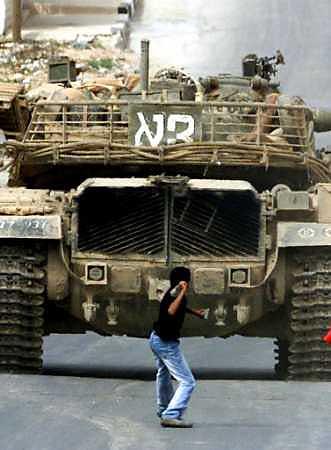

We're from the Government, and we're here to help!

Good Enough for Government Work: A Friendly Note from a “Proud American” at the TSA

Four years ago, film producer Nicholas Monahan used a piece on Lew Rockwell's website to describe how his pregnant (and nigh-on-delivery) wife was molested at a airport security check, and how he was arrested and treated as a quasi-terrorist for the supposed offense of objecting to that crime.

Just a few days ago, one of the chair-moisteners employed by the Transportation Security Administration – that's the Homeland Security Department's special division in charge of harassment, petty theft, and the molestation of passengers and children – wrote to Lew Rockwell to defend the honor, such as it is, of his degenerate agency. Since the author of that letter is a federal employee, it should come as no surprise that it is replete with errors of spelling, diction, and logic – in addition to being sent to the wrong person, since Lew was not the author of the essay that provoked the letter in the first place.

Here are the highlights, such as they are, with the spelling and punctuation intact:

"I was searching some webpages, and came accross your website that mentioned TSA in it. So i read it. You'll understand later in my letter to you. As I was reading, I was playing out both sides of the incedent that happen to you, your wife, and your child. as well as the screeners at the airport. Here's a few things that you, I guess, have completly forgotten when it comes to national security, and YOU being EXEMPT because...what, your wife is pregnant and you're tired? Sorry, doesnt work that way.... The screeners are doing their jobs. Yes, the female screener who was screening your wife SHOULD have asked your wife if she would like private screening before making her unveil herself infront of so many strangers, however, this is NO excuse for you to become irate and demand to know whats going on. Yes, she is your wife and you would like to know whats happening, but charging up to a screener and demanding to know what they did is absolutly NO way to go about it.... your total lack of confidence in what TSA is here doing, to me, as a proud american, makes me absolutly disgusted. For you to totally throw out the terrorists attacks on 9/11, and those all over the world makes me want to go house to house just so I can tell them. 'hey, you, put down your newspaper full of bs, one sided stories and get an opinon of your own, and do something for your country' but of course, I can't do that.
again with the terrorism. they HAD to touch your wifes breasts, she is no exempt because she is pregnant. Maybe you have not seen any movies with women carrying 'fake' babies but its possible. Its a maternity suit...people use them. AND they can hold a whole lot of stuff which is illegal in the sterile....So next time you start coming to conclusions, maybe you can take a step back, take a deep breathe and ask yourself "well...is it really that bad for them to be doing this?" or maybe ask yourself 'oh, do I want another 9/11?'.... It distrubs me how often I hear people talk badly about the TSA and how its all 'bullshit'. The TSA Screeners (which are now Officers) are more then capable of performing their much needed duties, every day. Yes, people make mistakes, and the female screener for your wife made a slight one, but that doesnt excuse your behavior.”


What “distrubs” me (I'm guessing that's the federally approved spelling from now on) is the news that the arrogant, illiterate bullies employed by the TSA are now “officers” -- meaning, I suppose, that they have the power to carry out arrests on their own supposed authority.

Mr. Monahan's “behavior” was to demand that someone take responsibility for official misconduct that left his near-term pregnant wife a sobbing wreck. There is no need to “excuse” behavior that is understandable, responsible, and proportionate to the offense.

At least, this would be true if we were still, in any sense, a free society.

Wednesday, December 6, 2006

The Pointlessness of Prohibition, part II: The Prohibitionist Pharisees


And He called the multitude, and said unto them, Hear, and understand; Not that which goeth into the mouth defileth a man; but that which cometh out of the mouth, this defileth a man. Then came His disciples, and said unto Him, Knowest Thou that the Pharisees were offended, after they heard this saying?... And Jesus said, Are ye also yet without understanding? Do not ye yet understand, that whatsoever entereth in at the mouth goeth into the belly, and is cast out into the draught? But those things which proceedeth out of the mouth come forth from the heart; and they defile the man. For out of the heart proceed evil thoughts, murders, adulteries, thefts, false witness, blasphemies....

Matthew 15:10-12, 16-19

For ten years, ex-convict Dave Lanphier was hopelessly addicted to methamphetamine. “Nothing seemed to matter but the drug ... it pretty much took hold of my life and that's what I lived for each day,” the Boise resident told the local NBC affiliate, KTVB. A large part of the problem is that meth is “cheap and easy to get,” he explained.

Lanphier's experience, KTVB invited viewers to believe, typifies the “crisis” of methamphetamine use that has seized the Treasure Valley, which extends roughly from Boise, Idaho to Ontario, Oregon.

“Methamphetamine crime is reaching epidemic levels in Idaho,” reported KTVB. “From Canyon County to Gem County, Meth is tied in some way to nearly every serious crime in Idaho.”

“When I say this community is in crisis,” commented Gem County Prosecutor Tim Fleming, “I really mean that by virtue of the numbers of cases of people that we're seeing of people that are charged with criminal offenses in dealing with Methamphetamine.”

And “experts” insist that meth “is the most addictive drug there is,” the report continues.

“Anything that can be done needs to be done, because it is a bad drug,” insisted Lanphier. “It's not like Marijuana were you can get stoned and never smoke again. Meth is addictive and once you get hooked on the drug you just throw your morals out the window.”

Lamphier, who is in jail once again for violating his parole, faces several felony counts that could result in another prison term. And as it happens, it was in prison that the 35-year-old Lamphier first used meth “and got hooked,” comments the KTVB report in an aside that should be the focus of the story.

Talk about burying the lead: The recidivist criminal and pitiful drug addict whose plight was used to make vivid the Treasure Valley's methamphetamine “crisis” -- the tortured soul who insists that “anything” the State could do to fight Meth is worthwhile -- first got addicted in prison.

What this means, in simple terms, is that the Treasure Valley could literally be turned into an open-air prison, and meth would still claim its bounty of addicts. Somehow, those who are determined to ingest the drug will find a way to do it. Trying to control what goes into the mouths of addicts and potential addicts simply won't work; their hearts need to be changed, and that task doesn't fall within the State's proper jurisdiction.

Full employment for armed, adolescent-minded State agents -- one of the many "benefits" of the Government's crack-down on meth.


The KTVB story is a splendid example of trickle-down totalitarian propaganda. It follows the same template used by countless other “news” stories, the definitive example being Newsweek's August 8, 2005 scare story “America's Most Dangerous Drug.”

Newsweek's scribes exhausted their thesauri in the effort to describe methamphetamine use as an autonomous, self-replicating malignancy: It is a “scourge,” a “plague,” a “menace,” an “epidemic.”

“More than 12 million Americans have tried methamphetamine, and 1.5 million are regular users, according to federal estimates,” recited Newsweek's editorial staff in an act of Statist stenography disguised as journalism. “Meth-making operations have been uncovered in all 50 states; Missouri tops the list, with more than 8,000 labs, equipment caches and toxic dumps seized between 2002 and 2004. Cops nationwide rank methamphetamine the No. 1 drug they battle today: in a survey of 500 law-enforcement agencies in 45 states released last month by the National Association of Counties, 58 percent said meth is their biggest drug problem, compared with only 19 percent for cocaine, 17 percent for pot and 3 percent for heroin. Meth addicts are pouring into prisons and recovery centers at an ever-increasing rate, and a new generation of `meth babies' is choking the foster-care system in many states. One measure of the drug's reach: Target, Wal-Mart, Rite-Aid and other retailers have moved nonprescription cold pills behind the pharmacy counter, where meth cooks have a harder time getting at them.”

(Remember that last item – the one about retail stores hiding cold pills from potential addicts. We'll return to that anon.)

For those not patient enough to wade through their prose, Newsweek's staff provided nausea-inducing depictions of meth's effects – a close-up of an addict's hideously degenerated teeth, a portrait of a horribly burned victim of a meth lab explosion, a photo of a prematurely aged user.

As I noted above, the Newsweek story is the template from which hundreds or thousands of similar “stories” have been struck.

Slate's media critic Jack Shafer, performing fact-checking and quality-control functions that Newsweek's editors no longer bother with, points out that the story was an artless exercise in misdirection.

Why didn't the magazine try to find out “how many people [meth] has killed?” asks Shafer. “If meth is really the most dangerous drug, you'd think the magazine would have provided some sort of body count.” (Based on fatality rate and related social trauma, the nation's most dangerous drug is alcohol, which is perfectly legal.)

Shafer also calls B.S. on Newsweek's State-provided estimates of the meth-using population. The publication claims that 12 million have “tried” meth, and 1.5 million are “regular” users (juxtaposing those figures suggests, pace the above-quoted addict Dave Lanphier, that one use of meth is insufficient to leave the user hooked on the drug) without establishing “whether those numbers are up or down,” Shafer notes. “How can they claim an epidemic unless they've got the numbers?”

Well, it has to be an epidemic, y'see, because the State's law enforcement agencies have identified it as Enemy Number One in the War on Drugs. It matters not whether the statistics vindicate that designation; the State through its priesthood has revealed the truth to us, and our duty is to believe and obey. Blessed be the name of the State.

There are good reasons to suspect that methamphetamine use today is much less common than it was during the 1950s and 1960s. In 1958, notes Shafer, pharmaceutical companies “produced 3.5 billion legal tablets of various amphetamines in 1958, enough to supply every American with 20 standard doses ... a year. Those pills were potentially just as addictive and potentially just as deadly as the meth found on the street today. Less than a decade later, the annual production of pharmaceutical amphetamines had climbed to 8 billion tablets, and by 1971 it topped 12 billion. These quantities far exceeded the amount needed for the then-approved medical uses of amphetamines in treatment of narcolepsy, obesity, depression, fatigue, anxiety, and hyperkinetic children.”

Government-sponsored drug addiction: Beginning in WWII, pilots and other combat personnel have been encouraged to use amphetamines.

As a Kindergarten-age child considered hyperactive by my teachers, I came very close to being put on amphetamines; my parents didn't permit this to happen, and this ranks very high on the lengthy and growing list of reasons why I love and honor them without measure. But my own experience tends to validate, at least for me, Shafer's observation that doctors “over-prescribed these drugs” as late as the early 1970s. And perhaps the best-known and most prominent user/addict of legal amphetamines was John F. Kennedy.

Those whose doctors were reluctant to prescribe amphetamines resorted to a growing black market; this led to the 1965 Federal Drug Abuse Control Amendments. In keeping with Grigg's First Law of Federal Action (“Those problems Washington doesn't create, it exacerbates by imposing a `solution'”), this attempt at regulation created huge profit incentives for “kitchen chemists” who cooked their own meth. As government continued to constrict the legal amphetamine market, profits continued to soar for illicitly manufactured amphetamines.

In 1988, the Feds clamped down severe restrictions on the P2P precursor compound used to manufacture amphetamines. “Some chemists switched to ephedrine, which could be found in cold remedies,” Shafer recounts, “and when the government suppressed ephedrine, some moved on to pseudoephedrine, the active ingredient in Sudafed and other decongestants. Now the government limits even the sale of over-the-counter preparations containing pseudophedrine.”

And that, Dear Reader, is the reason why Claritin-D, Sudafed, and other non-prescription palliatives for cold, flu, and allergy suffers are covered by the so-called PATRIOT Act, and – as of last March – have been treated like controlled substances at your local retail store.

Under the “Combat Methamphetamine Epidemic Act of 2005” (take that, oh ye of little faith in the divine State!), which was grafted onto the PATRIOT monstrosity, “The sale of cold medicine containing pseudoephedrine is limited to behind the counter,” explains the Food and Drug Administration (a federal agency that, like nearly all the others, has no Constitutional excuse to exist). “The amount of pseudoephedrine that an individual can purchase each month is limited and individuals are required to present photo identification to purchase products containing pseudoephedrine. In addition, stores are required to keep personal information about purchasers for at least two years.”

Where does that information end up?

While nobody can say for certain, here's a very good guess: Your pseudophedrine consumption habits are pooled with other personal data being collected by the State and used to assess your tendency toward terrorism and other anti-social behavior.

After all, as Republican Congressman Charlie Dent of Pennsylvania puts it, the Meth epidemic “is a form of terrorism itself.” Which means, I suppose, that if we were able to buy and use Sudafed without federal supervision, the terrorists will win.

Many dangerous and destructive things – from trans-fats (which have been targeted by prohibitionists as well) to narcotics, both smoked and swallowed – can be taken in through the mouth. Those exercising wise stewardship over their bodies will avoid the worst of them, to the extent their knowledge allows, and be judicious and moderate in consuming healthy things, as well. This is in keeping with what the Apostle James called the “perfect law of liberty” (James 1:25; see also Galatians 5:1-18; Colossians 2:12-17).

This approach is immeasurably preferable to the suffocating – and murderous – paternalism practiced by prohbitionist Pharisees, ancient and contemporary.

Tuesday, December 5, 2006

The Pointlessness of Prohibition (Pt. I)


Last of the breed: Legendary Frontier Marshal Bill Tilghman, a casualty of our nation's first "War on Drugs."


On this day (December 5) in 1933, the 21st Amendment was ratified by Utah, thus bringing to a merciful end one of our nation's most deranged experiments in social control: The federal ban on “the manufacture, sale, or transportation of intoxicating liquors within, the importation thereof into, or the exportation thereof from the United States....”

It is a pity that this exercise in civic derangement, which began in 1920, hadn't ended a decade earlier. Had reason reasserted itself by 1923, numerous tragedies could have been avoided, including the murder of legendary frontier lawman Bill Tilghman by a drunken, corrupted prohibition agent named Wiley Lynn.

At the time of his death in November 1924, Tilghman was seventy-five, and had spent a half-century in law enforcement. As a teenage buffalo hunter, Tilghman had dropped thousands of the prairie bison, an accomplishment not to be mocked even though he and other hunters were being used (often unwittingly) in a federal scheme devised by General Sherman to herd the Plains Indians into reservations. During his hunts the young Tilghman made the acquaintance of Bat Masterson, Wyatt Earp, and others with whom he would later collaborate as members of the legendary Dodge City Peace Commission.

During the 1890s, Tilghman, as a federal marshal in Oklahoma, led the effort that defeated the Doolin-Dalton gang; he single-handedly captured gang leader Bill Doolin in 1895. Widely and properly admired for his insane courage (“Tilghman would charge hell with a bucket,” said an admiring Teddy Roosevelt), the marshal was also respected for his kindness and integrity. “The man I consider it an honor to have known and to have ridden with was Bill Tilghman,” wrote George Bolds, a widely respected frontier marshal in his own right. “Wyatt Earp was a great Western marshal, but to my mind, Bill Tilghman was greater, both in character and in deeds.”

After a brief career in politics and a short stint as a Hollywood consultant, Tilghman was dragged out of retirement in 1924 to serve one last term as a city marshal. At the time the venerable lawman was dying from cancer, something known only to himself and his intimate friends (including, of course, his second wife, Zoe; his first wife Flora had died several years earlier). Oklahoma Governor Martin Trapp gave Tilghman the assignment to clean up Crockett, an oil town widely reputed to be the “wickedest city in Oklahoma.”

Cromwell was dominated by a criminal syndicate headquartered in Oklahoma City. Like many other murderous cliques of its sort, the OKC mob was profiting handsomely as a result of prohibition, which led to vastly inflated prices for sub-par booze. Killian, the mob boss who ran Cromwell, diverted a portion of the profits into the pockets of federal Prohibition Agent Lynn.

Tilghman, aware that the federal agent was in the pocket of the mob, had sharp words with Lynn on more than one occasion, generally after the Fed had released a criminal suspect the marshal had put in jail. Tilghman was also aware that the mob had put a price on his head. Tilghman was fatally shot during an attempt to arrest and disarm a drunken Lynn on the night of November 1. Despite being identified by one of Tilghman's deputies as the one who fired the lethal shots, Lynn was acquitted of the crime he's still widely believed to have committed.

Bill Tilghman was the last of his breed, a Frontier Lawman devoted to maintaining a civic order intended to protect life and property. His murderer could be regarded as a particularly corrupt specimen of the New Model Federal Lawman, a parasite serving the whims of social engineers determined to use the State's coercive power to correct what they consider to be defects in the way others choose to live.


It's always "For the children": A 1920s-era federal propaganda poster urging compliance with the national ethanol price support program (aka Prohibition).

Biologist and political commentator Bill Walker describes Prohibition as the first federal effort to “regulate the bloodstream of all US citizens.” It was also a huge subsidy to both the criminal Underworld and the bureaucratic political class with which organized crime lives in corrupt symbiosis.

One of the little-appreciated benefits of alcohol is its use as a termagant repellent.

At the time alcohol Prohibition (what Walker calls the “federal ethanol price support program”) went into effect, the equivalent program for narcotic drugs was in its infancy. Like its long-dead sibling, the narcotic price support program, known colloquially as the “war on drugs,” has done nothing to reduce consumption of various controlled substances, but a great deal to enrich the criminal underworld and, even worse, to empower the much deadlier criminal syndicate called the State.

I'll have more to say on that subject tomorrow....

Monday, December 4, 2006

Pig-Men on Patrol


“No question, now, what has happened to the faces of the pigs. The creatures outside looked from pig to man, man to pig, and pig to man again; but already it was impossible to say which was which.”

George Orwell, Animal Farm

The first reaction of most people to the sight of a police patrol car in their rear-view mirror is a reflexive twinge of anxiety.

This is true even for those with clean records and a clear conscience: Policemen – even the best of them – are heavily armed agents of the State who exercise broad discretionary powers to deprive people of life and liberty.

It's not difficult to imagine how the irrepressible unease most people feel over being shadowed by a cop would be greatly magnified by the knowledge that the patrol car in question contained a patrolman who was a decorated former officer of the KGB. In his former occupation, the police officer now riding the anxious motorist's rear bumper served a stint managing “detention facilities” for the masters of the Soviet gulag.

After coming to the United States, this patrolman had been employed for an unspecified amount of time by a CIA front company now notorious for its role in “extraordinary rendition” of terrorist subjects to torture chambers abroad – some of which, incidentally, are dungeons in former Eastern Bloc countries that were once operated by the KGB.

This is not a hypothetical exercise.

Not a welcome sight in the rear-view: Lt. Colonel Emin Gadzhiyev of the Second Chief Directorate, Soviet KGB (ret.) tries on his Broward County (Florida) Sheriff's Department Uniform


Ten years ago I wrote a lengthy and detailed profile of Emin Gadzhiyev, a former Lt. Colonel in the Second Chief Directorate of the Soviet KGB who came to the United States in 1989 and ended up in Broward County, Florida.

In the mid-1990s Gadzhiyev was studying to become an American police officer, a goal he achieved in 1999. He spent a few years with the Broward Sheriff's Office while also working for CTC International Group Inc., a West Palm Beach-based business consulting group that also employed former CIA, FBI, IRS and Drug Enforcement Administration personnel, in addition to veterans of British Intelligence (and most likely other foreign intelligence agencies).

CNN's financial news affiliate reported in 1999 that CTC acted as a sort of investment Sherpa for U.S.-based corporations considering joint ventures in the former Soviet Union.

It's likely that Gadzhiyev's gig with the CTC grew out of his earlier engagement with a Florida-based CIA front called Premier Executive Services, for which the ex-KGB agent supposedly compiled a large dictionary of Soviet counter-intelligence terms. Yes, it's possible that Gadzhiyev did just that, and nothing more. But it should be pointed out that Premier Executive Services has been deeply involved in the "extradorinary rendition" of terrorist suspects -- including some completely innocent people -- into the hands of Soviet-trained torturers in countries like Syria.

The Pain Plane: Premier Executive Services, a CIA front company that employed Emin Gadzhiyev, operated a fleet of executive jets like this one to deliver terrorist suspects to off-shore torture facilities in Syria, Egypt, Romania, Poland, and elsewhere.


Gadzhiyev had considerable expertise to offer in both fields -- international business, as well as detention and interrogation. He was well acquainted with both security personnel and key criminal figures (but I repeat myself) in energy-rich Soviet Central Asia, a region whose resources are greatly coveted by the American Power Elite.

A native of Azerbaijan, Gadzhiyev claims that he had to flee the Soviet Union after uncovering widespread corruption and ties to organized crime among his KGB superiors in that former Soviet republic.

That claim is entirely plausible, since the KGB – by what ever designation it has been known, from the Cheka to its current incarnation, the FSB – has always controlled the most powerful elements of the Russian/Soviet underworld. When I interviewed him, Gadzhiyev claimed that the KGB under its founder, Feliks Dzherzhinsky had effectively eliminated organized crime, before the agency mutated into something less commendable than it had been at its founding. Gadzhiyev also emphasized that his break with the KGB was prompted by his disillusionment with the agency's corruption, rather than its “ideals.”

The flavor of the KGB's “ideals” is offered by an interview given by its founder on Bastille Day, 1918 to the periodical Novaia Zhzin:

“We stand for organized terror - this should be frankly admitted. Terror is an absolute necessity during times of revolution. Our aim is to fight against the enemies of the Soviet Government and of the new order of life. We judge quickly. In most cases only a day passes between the apprehension of the criminal and his sentence. When confronted with evidence criminals in almost every case confess; and what argument can have greater weight than a criminal's own confession.”

Gadzhiyev, as far as I can tell, never disavowed the founding ideals of the secret police agency he served with such distinction. His employment application for work with the Broward County Sheriff's Office proudly listed the KGB and the CIA as former employers and references, and mentioned the “Red Star of the Soviet Union” among his professional commendations. He earned the Red Star for his role in a scheme to steal classified Space Shuttle technology during a conference in Baku.

So at the time of his arrival to the U.S., Gadzhiyev's professional background consisted of exemplary service to the world's most capable terrorist organization. Which is most likely why he was recruited to work for the CIA.

A 1999 story by the Broward-Palm Beach New Times reported that Gadzhiyev's work with the CIA front Premier Executive Services involved compiling “a 400-page dictionary of Soviet counterintelligence terms,” which, as noted above, seems like a pretty sterile exercise in busywork. During the same period he worked as a consultant with federal and local law-enforcement agencies “in investigating cases involving organized crime figures from the republics of the former Soviet Union....”

His employment application, as noted in my 1996 article in The New American, listed three FBI agents as references.

When I spoke to him in December 1996, Gadzhiyev insisted that the KGB and its satellites were not allies of Russian organized crime syndicates, but rather their devoted enemies. He also pointedly mentioned that there were many other ex-KGB operatives in the United States who should be recruited into the ranks of U.S. Law enforcement and intelligence organs:

"I'm not the only one out here.... I know many others, [including] some from the Second Chief Directorate, from organized crime units, from the militia ... not only from the former Soviet Union, but from the East European Bloc as well, who are working odd jobs or working with computers. There's a tremendous resource that's not being used."

After speaking with Gadzhiyev ten years ago, I bounced his suggestion off Sergeant Mike Smith, head of the Philadelphia Police Department's Russian Organized Crime Task Force.

Sgt. Smith observed that "it is extremely difficult to know how much we can trust anybody who has been connected to any of the Soviet security services. Many of the most vicious KGB officials have set up private security firms in Russia, which offer 'protection' from the mafia but are actually working in collaboration with them. It's possible that some of the Russian gangsters might import the same tactics here."

Smith also described an unsettling example of KGB operatives attempting to co-opt the militarization of local police agencies throughout the United States:

“[In 1995], a law enforcement agency in San Francisco got a visit from a group calling itself the Moscow Police Organized Crimefighting Regional Department -- supposedly a SWAT team-style elite unit to battle the mafia. They were supposed to go on a multi-city tour to consult with various law enforcement agencies. But we checked with an intelligence source and learned that the original members of that group had been replaced by former KGB operatives who are now involved in organized crime.”

Although “we were able to derail that particular venture,” Sgt. Smith pointed out, “with the kind of travel that takes place today, it's difficult to know how many other situations of this sort we might find."

Of course, it's not just the ease of travel that gives rise to “situations of this sort.” Much more important is the increasingly Sovietized nature of our own law enforcement and intelligence system, which is now a militarized, centralized entity under the authority of a lawless executive exercising (as Lenin put it) “power without limit, resting directly on force.”

The relationship between pre-Soviet America and post-Soviet Russia is akin to that described at the end of Orwell's Animal Farm, in which revolutionary “Pigs” and the oppressive Farmers had morphed into indistinguishable human/porcine hybrids.

One illustration of this alarming reality was offered in the 1999 New Times profile of Gadzhiyev, which described his former employer, the KGB, as “a centralized monstrosity that was essentially the equivalent of the CIA, NSA, FBI, and INS rolled into one. With more than a dozen divisions under its umbrella, KGB headquarters in Moscow controlled spies overseas, border guards, counterintelligence officers like Gadzhiyev, and the infamous `thought police,' who threw dissidents like Andrei Sakharov into gulags.”

Under the 2004 National Intelligence Reform Act, the Director of National Intelligence (or “Intelligence Czar”) presides over a vast monolith with exactly the same organizational schematic followed by the old KGB. A provision of that act permits the Intelligence Czar to employ any federal agency for the purpose of covert operations; another permits the Czar to re-allocate congressionally authorized funds for any purpose he sees fit.

In similar fashion, the Department of Homeland Security has (in principle) plenary authority over every law enforcement body within our borders. It's likely that in the event of a jurisdictional dispute, the Commissar for Homeland Security would defer to the Commissar for National Intelligence.

The apparent assassination of ex-KGB agent Alexander Litvenenko has made vivid the murderous potency of the supposedly moribund Soviet intelligence apparatus, and illustrated to good effect the difficulty of navigating through that tenebrous and deceptive realm. Litvenenko, as Justin Raimondo points out, was typical of his "ex"-Chekist comrades in his eagerness to use his professional contacts to enrich himself through illicit means -- such as smuggling radioactive materials like the Polonium 210 isotope that was used to kill him, and compiling compromat (blackmail material) for use against rivals and political enemies.

(That Litvenenko was a bad guy doesn't mean that Putin and his faction are any better, of course, and just because Putin's a bad guy doesn't necessarily mean that he ordered Litvenenko's assassination.)

Recall, once again, Emin Gadzhiyev's words to me ten years ago: "I'm not the only one out here.... I know many others."

How many of Gadzhiyev's comrades are active in this country, working both sides of the law on behalf of the Pig-men of the Power Elite? What role do they play in helping to craft the institutions of our Homeland Security State? What politically exploitable mischief could they be planning for the purpose of breaking down the remaining opposition to full-fledged totalitarian rule?

Obiter dicta

For several years, various commentators have claimed that former Russian Premier Yegeny Primakov and former East German Stasi commissar Markus Wolf have been employed as advisers or consultants for the Department of Homeland Security. While this is certainly (and lamentably) plausible, I've yet to see any suitable confirmation of this account. Primakov did address a seminar on Homeland Security-related issues sponsored by the Center for International Strategic Studies in Washington, but that's the limit of what I've been able to confirm.

Emin Gadzhiyev, to the best of my knowledge, is no longer employed by the Broward Sheriff's office. He apparently moved to eastern Tennessee about a year ago, and that's where the trail -- at least for me -- grows cold.

He earnestly claims to be pursuing "the American dream," and if he is sincere I wish him well. But as a wise friend of mine frequently says, we can "never, ever trust a Spook" -- particularly one who worked the Soviet side of the street.

On another note -- I provide regular commentaries on global affars for The Ex-Pat Show, a weekly syndicated radio program produced by, and featuring, my hermano Tai Aguirre. Please check it out!

Sunday, December 3, 2006

Police Perjury, and Burglars with Badges


“I've got a gun and a badge. I'm always right.”

Sgt. Chuck Schoville of the Tempe police department probably thought he was being facetious when he made that remark to two men he had stopped on suspicion of littering. But "jokes" of this sort, like George W. Bush's oft-repeated thigh-slapper about how things would be easier if he were a dictator, are more revealing than amusing.

At the time he decanted that line, Sgt. Schoville was mugging for the camera: The August traffic stop was taped for broadcast on the Tempe P.D.'s community access program "Street Beat."

This might explain why after he had made the stop and demanded that the two men present identification, he offered to release them without writing a ticket if they would spontaneously compose and perform a “rap” about the evils of littering.

Oh, did I mention that the driver and his passenger were black?

“No littering ticket if the two of you just do a little rap about ... what do you want to do a rap about? Littering? About the dangers of littering – OK,” stated Sgt. Schoville, intoxicated with a sense of his own cleverness.

On first reading about this incident, I was irresistibly reminded of the classic MASH episode “The General Flipped at Dawn.” In that installment, General Bratford Hamilton Steele (Harry Morgan, in an Emmy-winning guest role before he was cast as Col. Potter), is preparing to question a black helicopter pilot during an inquiry. “But first,” Gen. Steele says as the pilot prepares to testify, “a number.”

The chopper pilot replies with a puzzled stare.

“You know, a musical number,” prompts Steele.

The pilot's shoulders slump and he gives the other officers a “You've-got-to-be-kidding” look.

“C'mon, son, it's in your blood!” exclaims Gen. Steele, before improvising his own buck-and-wing dance to illustrate what he had in mind.

In General Steele's defense, he was pretty clearly insane. Oh, and he was a fictional character as well.

As to Sgt. Schoville, well ... as unlikely as it seems, given Arizona's climate, it appears that he was just recently chipped from a glacier.

Unfrozen Caveman Lawyer Kirock apparently has a relative working for the Tempe Police Department.

“You must forgive me,” Sgt. Schoville, aka Unfrozen Caveman Police Officer, might insist. “I'm a simple unfrozen caveman whom your scientists recently revived. Many of your ways are strange and frightening to me. For some reason, I didn't get the e-mail memo explaining that crude racial stereotypes are impermissible in polite society; perhaps my Blackberry malfunctioned, or my Wi-Fi coverage was inadequate. But even to an Unfrozen Caveman Police Officer like myself, one thing is perfectly clear: As long as I have a gun and badge, I'm always right!”

And therein lies the real outrage here – namely, the assumption that toting a piece of State-issued costume jewelry confers open-ended authority and something very close to impunity.

Sgt. Schoville is not the only police officer to get caught yukking it up at the expense of a detained motorist.

Last January, Tom Cox was stopped and detained on suspicion of DUI by more than a half-dozen police officers near Huntington Beach, California. During a search of Cox's Hyundai, Officer Brian Knorr popped the trunk and tossed a snub-nosed, loaded pistol inside. A second officer, who apparently hadn't seen Knorr plant the gun, was brought in to search the car and quickly found the firearm.

Holding it with both hands, the second officer turned to Cox, who was terrified at the prospect of being arrested on a weapons charge – or perhaps being swarmed and beaten by the cops.

“I thought I was in for a butt-whipping,” Cox later testified. “I just thought I was going to die that night. I realize now that they were making me look like a fool in front of everybody else.” All of the officers on-scene enjoyed a good laugh at Cox's expense.

The police at the scene acted like “gang members,” contended Cox and his public defender during his DUI trial in October. For several months, Cox was under the impression that he was facing a weapons charge, as well. And that misunderstanding didn't dissipate until shortly before Cox went to trial: After he filed a complaint with the police, “cops, prosecutors, and city bureaucrats attempted to keep the incident a secret by sealing records and stalling discovery of related documents,” reported the O.C. Weekly.

“By the time of the late October trial against Cox, however, four officers testified that the gun toss was no reason for public alarm,” continued the journal. “They admitted that none of them had mentioned the gun in official reports before Cox's complaint. And, though the officers professed amnesia on certain details, they all shared with jurors an identical excuse: the planted gun was merely a prop in a routine `training exercise' for the junior cop at the crime scene.”

Uh, yeah, right.

Officer Knorr threw a loaded gun into the trunk of Cox's car. And Knorr actually admitted under oath that he had planted guns before.

According to a department spokesman, the Huntington Beach Police Department's official policy forbids the use of loaded weapons in training exercises. Stan Goldman of Loyola Law School in Los Angeles, who has many hundred hours of courtroom experience, told the Weekly: “I've been in many, many trials and I've never heard of anything stranger than this.”

Cox, rattled by the prospect of a weapons charge, failed his field sobriety test. Blood tests showed “insignificant” traces of alcohol and marijuana in his bloodstream. (Cox has a prescription for medical use of marijuana.) A retired L.A. County Sheriff crime lab supervisor testified in Cox's defense that the heroes from the Huntington Beach P.D. Had botched the DUI investigation.

Nonetheless, a bored, distracted, and indifferent jury sided with the police, finding Cox guilty of DUI and four other misdemeanors. His sentence will be handed down a week from next Friday. The police, on the other hand, will most likely suffer neither civil nor professional sanctions. “Current conventional wisdom,” notes the Weekly, “says that officer privacy in the performance of their powerful government jobs supersedes public accountability.”

Cox isn't the only citizen to get caught in a police “training exercise.” Last year, Las Vegas police admitted to planting narcotics in a suspect's car – once again, as a “training exercise,” this time for a drug-sniffing dog (most likely bought and trained with a federal subsidy). The officers, upon “finding” the drugs, arrested the suspect, and charged with him drug possession.

In court, the officers claimed to have “forgotten” that the drugs had been planted. This oddly convenient case of detail-specific amnesia, so much like the condition that afflicted the officers in Huntington Beach, doesn't explain why the Las Vegas officers fabricated police reports and otherwise covered embarrassing details of the incident. The fog of forgetfulness lifted sometime before two police officers perjured themselves in the witness box in an attempt to send the innocent suspect, Mark Lilly, to prison.

That's right: These heroic guardians of the community, these self-sacrificing exemplars of civic virtue, were willing to send an innocent man to prison just to avoid embarrassment.

Yet another incident of this sort took place in Brooklyn last April, during a vice squad investigation of a massage parlor. An undercover officer strode into the reception area for roughly 43 seconds without attracting attention, and then left. Shortly thereafter, the vice squad raided the business and shut it down, on the strength of the undercover officer's claim that he had been propositioned for prostitution by all eight of the women present.

As it happens, the entire affair had been captured on surveillance cameras. Following his arrest, the massage parlor's owner told police that he could use the surveillance footage to prove that no solicitation had taken place.

So the owner was released, and the police were disciplined, right?

I mean, given the “new police professionalism” extolled by Supreme Court Justice Scalia, that's what we should expect, right?

Well ... not so much.

The day after the bust, the undercover officer and another policeman broke into the parlor and stole the incriminating videotape. Which is to say, they committed an act of armed burglary.

At one point, the undercover officer spied a pinhole camera, which he triumphantly ripped out of the wall, doubtless with the smug expectation that he and his cohort had destroyed all of the evidence.

But the owner, seamy and disreputable as he may be, works in the private sector, which means he's more astute than the government employees who burgled his business. The surveillance footage was stored on the system's computer hard drive. (Click here for a complete report, including video footage.)

The prosecution dropped the case (one of dozens built by the corrupt vice unit), and the squad commander was transferred. But so far nothing has been said about prosecuting the corrupt cops for false arrest or staging an armed burglary.

Summarizing one lesson of this sorry affair, former federal prosecutor John Sims (who is representing the massage parlor's owner and employees) states: “Certainly I do not think people should always accept the word of a police officer.... I don't know why they would lie in this case, but they did and nine people got arrested as a result of it.”

We should also remember that innocent people are getting killed because of the assumption that the power to carry a badge and gun confers something akin to legal and moral infallibility -- which includes permission to plant evidence when it suits them. (Click here, and then on the media window "NRH Police Plant Evidence," for one particularly egregious example.)

Thursday, November 30, 2006

Review of the News, November 30


An orbital view of the CIA-operated "Salt Pit" detention/interrogation/torture facility in Afghanistan

Today's Theme: Murderous Impunity


"To us, everything is permitted." -- From a 1919 editorial in Krasni Mech (The Red Sword), a journal published by the Soviet Cheka, forerunners of the KGB. Unofficial motto of the contemporary Homeland Security State being constructed under the reign of the Bushling.

"Torture Taxi" Victim Describes Ordeal, Demands Redress

As far as the regime that rules us is concerned, Lebanese-born German citizen Khaled al-Masri is an un-person. He was treated as such during the six months he was illegally imprisoned in Macedonia and Afghanistan, and he's still regarded an un-person by the regime now that he seeks redress for his treatment.


The large-framed, pony-tailed father of six, who somewhat resembles the noted libertarian comedian Penn Gillette, underwent six months of unlawful imprisonment, torture, and sexual abuse at the hands of Emperor Bush's servants.

Masri, who fled Lebanon for Germany in 1985, is the veteran of one failed marriage and many short-term jobs. For the past several years, he's been unemployed, living with his second wife and six children in a one-room apartment. In December 2003, seeking a brief respite from various domestic troubles, Masri took a bus trip to Macedonia. He was removed from the bus by Macedonian police and taken to a hotel in Skopje, where he was detained and interrogated for roughly a month.

On January 23, 2004, a group of masked Americans – a CIA-organized “snatch squad” well practiced in this sort of thing – dragged him off to an airplane bound for the “Salt Pit,” a detention and torture facility in Afghanistan.

"I felt two people violently grab my arms,” recounted Masri in testimony given yesterday to a House committee. “I then felt someone else grab my head with both hands so I was unable to move. . . . Finally they stripped me completely naked and threw me to the ground. . . . I felt a boot in the small of my back. I then felt a stick or some other hard object being forced in my anus. I realized I was being sodomized. Of all the acts these men perpetrated against me, this was the most degrading and shameful."

For five months, Masri was treated worse than most livestock. He was given fetid, greenish water; his typical meal consisted of “soup” that was an inedible slurry of leftover chicken parts from meals originally served to Afghan guards. He was kept in an unheated cell with one thin blanket as a barricade against the bitter cold of an Afghan winter.

On the second night of Masri's detention, recounts the book Torture Taxi, his masked captors dragged him from his cell in chains into another room, where he confronted seven other masked men. One of them, who spoke with a Lebanese accent, informed Masri that he was “in Afghanistan, where there are no laws ... we can do with you whatever we want.”

Within a very short time it was clear to Masri's captors that he was entirely innocent. Yet he was kept for five months before being dragged back to the Balkans and unceremoniously dumped on a hilltop in Albania.

Among the maxims followed by totalitarian rulers is this: Never explain, never apologize. Earlier this year a federal judge dismissed a lawsuit filed by Masri against former CIA director George Tenet (recipient of the Presidential Medal of Freedom). Federal Appeals Judge T.S. Ellis III allowed that Masri was entitled to some form of redress, he claimed that it would be injurious to national security for the lawsuit to proceed. (Remember that name; we'll return to him in a moment.)

The Bush regime has steadfastly refused to acknowledge it has wronged Masri in any way, it did offer an apology – to the German government, not to the individual German citizen who was wrongfully and illegally imprisoned, abused at length, and degraded in ways that normal people cannot even imagine.

The Atrocity in Atlanta, Continued

Details are emerging about the prelude to the State-authorized home invasion in which Atlanta resident Kathryn Johnston was murdered, and the whole thing is shaping up pretty much the way I had expected.

24-year-old Alexis Antonio White, the “reliable” informant cited in the affidavit used to procure a warrant for a "no-knock" raid, “is a petty criminal with a series of drug arrests in the past few years,” reports today's Atlanta Journal-Constitution.

“Records show he has been arrested at least once during that time on drug charges — last year, when he was charged with carrying 48 bags of marijuana. Police said he refused to stop his car for several blocks and his car reeked of pot....He has been convicted of at least one cocaine-related charge and served two years' probation, records show. A list of numerous arrests stretching back over the past seven years has him living at six different apartments. Atlanta police in a 2001 arrest report noted White's occupation as `drug dealer.' He was 19 at the time.”

Another key disclosure involves Atlanta narcotics officer Arthur B. Tesler., who was involved in the murder of Kathryn Johnston.

In May 2001 officer Tesler was involved in a head-on collision with Samuel T. Gulley, JR., who was riding a motorcycle. According to a lawsuit that was filed by Gulley in 2002 – and which resulted in a $450,000 settlement by the City of Atlanta – Gulley collided with Tesler's patrol car when the officer made an excessively wide turn while exiting a parking lot into the wrong lane.

As a result of the crash, Gulley spent three months in the hospital and was left with more than $90,000 in medical bills.

Gulley charged that Tesler and other officers “fabricated traffic charges against [him], ignored evidence ... and improperly initiated criminal proceedings” to cover up the officer's misconduct.

Notes the Journal-Constitution: “A police report written by Officer Jackson Christopher listed Tesler as the victim and suggested that Gulley ran into the officer's police cruiser. Tesler's account had him pursuing a fleeing suspect when he pulled out [into the wrong traffic lane]. But Tesler didn't alert radio dispatchers to the chase because of heavy radio traffic, according to court papers. The lawsuit contradicted Tesler's account by alleging that the officer was on routine patrol and didn't have his emergency lights or siren on at impact.”

Insisting that the settlement paid to Gulley isn't an admission of guilt, Atlanta Deputy City Attorney Jerry DeLoach told the Journal-Constitution: “Looking at all the facts and evidence, we thought it would be to the city's advantage and the employee's advantage if we minimized our exposure.”

Yes, it was vital to the best interests of the City – its ruling elite, that is, not its residents – to keep a valiant officer like Tesler on the payroll, so that he could eventually be involved in a home invasion that resulted in the murder of an 88-year-old grandmother.

The Hit on Litvenenko: A Defector's Perspective


About a decade ago, while a Senior Editor at The New American, I was contacted by a young Russian expatriate named Alexander Konanykhine, who had fled his country for the United States in 1992. At the time he was an adviser to Boris Yeltsin and president of a large and successful commercial bank in Russia that was coveted by the KGB-controlled Russian mob.


After being kidnapped by, and escaping from, the KGB, Konanykhine (along with his wife) came to the US and immediately contacted the FBI to warn that Russia's largest commercial bank – which was deeply involved in various ventures with the US government and various US corporations – was now in the hands of the KGB and the Russian Mob (or do I repeat myself). Three years later, while cooperating with the FBI, Konanykhine was warned by the Bureau that the KGB had taken out a contract on his life. Shortly thereafter, the FBI itself tried to extradite Konanykhine to Russia as part of a deal with the KGB.

Alex spent several years in legal limbo, often in jail, always living under the threat of being sent back to Russia and certain death. One one occasion he was literally about to be stuffed aboard a plane by US officials when a restraining order arrived. Eventually, Alex and his wife became the first people to be granted political asylum from “post-Soviet” Russia.

Given his background and experiences, Konanykhine's perspective on the recent murder of KGB/FSB defector Alexander Litvenenko by radioactive poisoning (which has been described, accurately, as a miniature nuclear attack), is eminently worthy of our attention. Alex sent me this link to two recent interviews, one on MSNBC and the other on CNN International, in which he briefly describes his own experience and comments on the Litvenenko case.

Incidentally, the Judge whose timely intervention saved Konanykhine's life was U.S. District Judge T.S. Ellis III – the same one who refused to allow Khaled al-Masri's lawsuit against the CIA to proceed.

During a hearing conducted in late 2003, Judge Ellis described Konanykhine's treatment as the result of a "sinister deal between the INS and the successors to the KGB. There's no treaty between Russia and the U.S., and they wanted this guy back for some reason, and the U.S. also wanted an FBI office in Moscow, and so they dealt. It was that simple.... This has all the earmarks of something strange. I don't understand what's happening with this man and Russia and our country."

One motive behind the effort to send Alex back to Russia was a $100,000 wrongful arrest suit he had filed against the Immigration and Naturalization Service (and, by extension, the Department of Homeland Security, which absorbed the INS). "The INS knew that I would be killed in Russia," Konanykhine told me in late 2003. "Certainly, eliminating the plaintiff is the most effective way to avoid a lawsuit. The question is -- shall the U.S. Government be allowed to kill people to avoid judicial review?"

Well, why not, if such is the sovereign will of the Almighty Decider? To him and his minions, "everything is permitted."

Wednesday, November 29, 2006

Support Your Paramilitary Police?


THESE are the "good guys."


“I am so sorry to see that you, who worked for a group that supports local police, have nothing but contempt for police,” a decent and conscientious police officer wrote in a recent e-mail. “You and [Reason Senior Editor and libertarian blogger Radley] Balko can point out mistakes here and there, and some very serious I agree. There many search warrants done each day across this country and most are successful and without incident. I don't see you commenting on them or I don't see you mentioning cops that get shot during these warrants.”

“I don't see you writing about cops like myself who after executing search warrants and yanking perps out in cuffs were approached by old ladies and and moms with kids thanking me for giving them freedom and liberty to move about their own property and streets,” continued the officer, who serves in Queens, New York. “I am an old right conservative and supporter of the free market. I am not a statist. Many more are getting shot by perps and not by police. I do believe though that most major cities are going to hire more and more bad guys because of the PC mentality.”

While I have no reason to think that this fellow is anything other than an earnest and capable public servant – in the honorable sense of that expression – it was his misfortune to write that letter on the same day that 23-year-old Sean Bell was killed by a 50-shot fusillade from plainclothes NYPD officers in the same borough.

The undercover police had staked out a strip club in the Jamaica section of Queens. Mr. Bell and his two companions (the latter were wounded in the assault) were at the club for a bachelor party. The incident took place in the early morning hours of what was supposed to be Bell's wedding day, a tardy but welcome development in light of the fact that he and his live-in girlfriend already had two young children.

Early reports of the shooting claimed that the officers believed that either Bell or one of his companions was armed, and that the driver of the car they were riding deliberately struck one of the officers after he had identified himself. After the shooting – during which stray bullets perforated some nearby apartment buildings – the officers called for backup. A search of the car and its occupants failed to find a gun.

Speaking the day after Bell was killed, New York Police Commissioner Raymond Kelly acknowledged (as paraphrased by the AP) that it was “unclear what prompted police to open fire,” and that it “was also not clear whether the shooters had identified themselves as police.”

One analyst describes episodes of this sort, in which several police empty their clips into unarmed suspects, as “contagious shooting,” “gunfire that spreads among officers who believe that they, or their colleagues, are facing a threat,” in the words of the New York Times. “It spreads like germs, or laughter, or fear. An officer fires, so his colleagues do, too.”

This type of behavior is predictable for Marines patrolling one of Baghdad's more turbulent neighborhoods. One would expect that a different mind-set would prevail for civilian police in American neighborhoods.

One would expect this. One would be wrong.

“Simply put, the police culture in our country has changed,” reports Joseph D. McNamara, a former police chief in Kansas City, Missouri and San Jose, in an op-ed published in today's Wall Street Journal (November 29; subscription only). “An emphasis on `officer safety' and paramilitary training pervades today's policing, in contrast to the older culture, which held that cops didn't shoot until they were about to shoot or be stabbed. Police in large cities formerly carried revolvers holding six .38-caliber rounds. Nowadays, police carry semi-automatic pistols with 16 high-caliber rounds, shotguns and military assault rifles, weapons once relegated to SWAT teams facing extraordinary circumstances. Concern about such firepower in densely populated areas hitting innocent citizens has given way to an attitude that police are fighting a war against drugs and crime and must be heavily armed.”

While police work is dangerous, and some police officers die heroically in defense of the innocent (may God grant rest to their souls and comfort to their families), the on-duty mortality rate of police officers is incredibly low. McNamara points out that last year, 51 officers were killed in the line of duty “out of some 700,000 to 800,000 American cops. That is far fewer than the police fatalities occurring when I patrolled New York's highest crime precincts.”

Here's a question somebody needs to examine: How many innocent civilians were killed by police last year, in paramilitary raids and other unnecessary shootings? I would wager that the civilian casualty count is higher than 51.

The “officer safety” mindset has dangerous and lamentable consequences beyond militaristic overkill, among them a tendency to immunize police against civil and criminal liability – or even significant career injury – when they kill innocent people.

Witness the case of Salvatore Culosi, a 37-year-old optometrist who was killed by Fairfax, Virginia SWAT operators last January. Culosi was suspected of operating an illegal sports betting operation, which is hardly the type of supposed offense that would justify sending a SWAT team to execute an arrest warrant. (Virginia has a state lottery, so laws against sports betting really make no sense.)

Although Culosi was unarmed and offered no resistance, he was shot dead during the January 24 encounter.

Just days ago, an official inquiry ruled out criminal charges against the man who killed Culosi, 17-year police veteran Deval Bullock. However, Bullock faces a three-week suspension without pay.

Astonishing as it may seem, the local police union is protesting this disciplinary sanction as excessive.

Marshall Thielen, president of the police union, called the penalty unprecedented and too harsh. "There's never been anything close to that," complains union president Marshall Thielen, describing Bullock's unjustified killing of an unarmed, non-violent citizen a "tragic mistake while trying to help the community."

Which of these individuals was a larger threat to the community: A mild-mannered optometrist who was taking bets on football games, or a heavily armed paramilitary operator who can kill people with impunity?

Questions of this sort ricochet harmlessly off a mind armored with the “officer protection” dogma.

Video Extra

Here's a TV news account of full-force SWAT raids in Dallas against "illegal" poker games.

Here's a fanboyish piece of self-dramatizing video from an Alabama SWAT operator that is borderline auto-erotic.

And here's a news report from Communist China documenting how the Boyz in Beijing are gettin' their SWAT freak on in anticipation of the 2008 Olympics.

Tuesday, November 28, 2006

Red Dogs, Death Warrants, and Murderous Marketing


A “warrant,” explains the insightful Lew Rockwell, is “a piece of paper the government issues itself before burglarizing your home.” Lew seems to be giving voice to the shade of Ambrose Bierce, author of The Devil's Dictionary – which is to say that he is using the scalpel of satire to pare away flabby sentimentality and expose the evil, pulsating heart of the matter.

Shortly after 88-year-old Kathyrn Johnston (who was initially identified in news reports as 92 years of age) was shot and killed during a police raid on her Atlanta home, I offered the following predictions:

"Color me cynical, but I'm guessing that we will eventually learn some or all of the following:

1)The warrant was defective;
2)The `evidence' behind it came from an unreliable source, such as a paid informant or a corrupt cop – or even the `John Doe' accused of making the buy, who cited a phony address as part of a deal;
3)As an alternative to the foregoing, `John Doe' doesn't exist, and the police will never find him, for the same reason O.J.'s diligent search has failed to find Nicole's “real killers,” and his fellow mass murderer George W. Bush has failed to find Saddam's “reconstituted” nuclear arsenal...."


Yesterday, the Atlanta Journal-Constitution reported:

“An informant who narcotics officers say led them to the house where an elderly woman was killed in a drug raid is accusing the officers of asking him to lie about his role, Atlanta police Chief Richard Pennington said Monday. The informant, who has not been identified, complained to department officials that the drug investigators involved in the bust had asked him to go along with a story they concocted after the shooting, said Pennington.”

The warrant (.pdf; thanks to Radley Balko) obtained by the counter-narcotics squad, which was signed one hour before the shooting, claimed that the informant had used $50 in city funds to purchase crack cocaine from a dealer known only as “Sam,” described as “a black male approximately 34 to 35 years of age,” who reportedly met the informant at the door, went into Johnston's home, and returned with two small bags of crack.

Why was it necessary to obtain a “no-knock” warrant and execute a paramilitary raid on the home? The warrant, issued on November 21, was good for ten days. However, the judge, County Magistrate Kimberly Warden, ticked the box authorizing a full-force raid on the grounds that it was reasonable “to believe that the giving of verbal notice would greatly increase the officer's peril and (or) lead to the immediate destruction” of the contraband.

The “peril” faced by the officers could have been avoided by simply staking out the premises, and waiting for “Sam” either to leave or to conduct another transaction. As it stands, three officers are recovering from bullet wounds and an innocent grandmother is dead.

Good job, Kimberly. Were you aware that you were signing Kathryn Johnston's death warrant? Do you even care?

Of course, we're assuming that any element of the story told by the police here is true and correct. The Informant appears to dispute every detail described in the warrant. In an interview with a local police station, the Informant – who is now in “protective custody” -- claimed that he never visited Johnston's home, and that he was contacted by the officers after the shooting.

“`This is what you need to do,'” the Informant quoted the police as saying. “You need to cover our ass..... It's all on you, man.... You need to tell them about this Sam dude.”

Does “Sam” even exist? So far, every detail described by the police officers who murdered Kathryn Johnston has been false.

“At first police said that the drug buy was made by undercover police, but later they said the purchase was made by an informant,” recounts the Journal-Constitution. “Early on, police said narcotics were found at the house after the shooting, but on Sunday investigators said they had found only a small about of marijuana, which police don't consider narcotics. Also, even though the affidavit said the house was outfitted with surveillance cameras, [Police Chief] Pennington said the informant had told internal affairs investigators that police officers had asked him to lie about the cameras.”

Chief Pennington couldn't confirm that Johnston's home had security cameras. Given that the frail woman's daughter had installed burglar bars and other safety precautions at the home, the use of security cameras as an additional precaution would make sense.

It's understandable that an elderly woman living alone in a neighborhood near a crime-ridden area would outfit her house to withstand a siege. Given that armed robbers conducting home invasion robberies have started to mimic the behavior of police when the latter conduct their own State-approved home invasions, it's entirely understandable that an old woman would open fire on armed, unidentified men breaking into her home.


What makes no sense at all – even assuming that there is some merit to the affidavit that led to the “no-knock” warrant – is the urgency to conduct a full-force raid on the site of an alleged purchase of $50 worth of crack cocaine.

Jason Smith, the investigator who filed the affidavit that prompted Magistrate Kimberly to issue the warrant, proudly describes himself as a veteran of “the City of Atlanta Police RED DOG section (Run Every Drug Dealer Out of Georgia)....”

“RED DOG” sounds more like the product of an advertising agency than a sober law enforcement initiative. It's impossible to run every drug dealer out of a maximum security prison; how could every drug dealer be run out of the entire state of Georgia?

But just as some people let the rhyme dictate the reason (to paraphrase a character from Voltaire's Candide), many politicians and bureaucrats seem to believe that the most important policy problem can be cured through the proper application of a catchy acronym. The “problem” in question, of course, is to justify the accumulation of power in the hands of those wielding the magic acronyms.

At the administrative level, RED DOG is intended to generate statistics that will enhance the job security of the managerial class. At the street level, the task of generating the proper statistics means that doors must be splintered, guns must be drawn, shots must be fired, and human flesh must be mortally rent.

In case of Kathryn Johnston, we're seeing a variation on the now-familiar theme of death by government. This could be considered an instance of death by government marketing.

In 2004, the City of Atlanta issued a document entitled “Fragile Momentum: Plan of Action for Rebuilding the Atlanta Police Department to Help Secure Atlanta's Position as Capital of the New South.” Issued jointly by Mayor Shirley Franklin and APD Chief Richard Pennington, the document was created with the help of the New York Consulting Firm Linder & Associates, which boasts that it has “helped clients successfully rename, brand and reposition dozens of products.”

The challenge in Atlanta was to “re-brand” a corrupt municipal government and inefficient police force. The “Fragile Momentum” (an inelegant and illiterate title, albeit a typical product of the sophomoric “insights” peddled by marketing gurus) is “structured in accordance with the Performance Engineering (tm) system for uprooting ingrained perceptions and securing committed behavioral change, among large groups of people, over a long period of time. This system has proven effective in both mass marketing and organizational-change applications.”

The marketing/advertising/PR industry began during World War I as an appendage of the Anglo-American war effort. Like the Lincoln Group and other propaganda firms that have hitched themselves to the Iraq War gravy train as “information contractors,” Linder & Associates has profited handsomely from the “War on Drugs.”

Recently, “[Linder & Associates founder John] Linder has provided the inspiration and direction for the Baltimore BELIEVE campaign to change the mindset of the city and rally citizens to take action against illegal drugs,” boasts the company's promotional material. “Baltimore, a Linder client, led the nation’s big cities in reducing violent crime during the three-year period 2000-2002.”

“John is simply the best at what he does,” gushes LAPD Chief Bill Bratton, the former New York City Police Commissioner.” Well, what does he do, exactly? “It’s awful to admit,” Bratton concedes, “that after working with John... I still can’t pronounce what he does."

Linder's friend, author David Quammen, provides a chilling description Linder's occupation: “The only way to describe John’s work is that he whispers into the ears of the powerful.”

It's not difficult to imagine the kind of affirmations Linder shares with the powerful: “You're wise; you're bold; you're visionary. You simply need to mobilize community support behind your principled leadership.”

The challenge facing Atlanta, the Linder-inspired “Fragile Momentum” report asserted, was that the public simply didn't take “ownership” of the city's crime problem. Indeed, city residents simply didn't understand that they had “more violent crime than any other city (over 100,000 people) in America....[T]hose interviewed certainly did not feel they were held hostage to crime violence....”

According to the report, this refusal of Atlanta residents to perceive the “crisis” is “high-risk civic behavior .... especially if that denial [were to result] in lack of proper support for the Atlanta Police Department in its crime reduction efforts.”
Not surprisingly, the “crime reduction” crusade was to include a radical escalation in counter-drug enforcement.

The section of “Fragile Momentum” dealing with narcotics enforcement offers a detailed indictment of the Atlanta PD for its insufficient zeal in enforcing drug prohibition. Arrests for drug-related offenses, undercover operations, and gun seizures were all down, which could actually mean that violent crime (as well as narcotics use, which – while unwise -- isn't violent and shouldn't be a crime) was actually in decline. The report also complains that “officers and investigators alike are frequently using the municipal `disorderly conduct' (DC-6) charge to arrest suspects found with small amounts of narcotics, rather than charging them with more serious criminal drug violations.”

Our Drug-Fiend ancestors: A magazine ad from 1885 extols the use of cocaine as a topical analgesic

Nor is it enough to ramp up criminal drug charges: “It is the dealer, not the user, driving drug activity and violence. Arrests for distribution, not possession, must be the measure of enforcement productivity.”

Those two brief sentences reflect the perverse incentive structure that inspired the needless fatal attack on Kathryn Johnston's home.

Atlanta's political class demands police “productivity” in the form of dealer arrests; under pressure to produce, a narcotics squad confects a story about a dealer and attacks a home. Now three police are recovering from gunshot wounds, and an innocent grandmother is dead.

The city's political class most likely looks on this episode as a troublesome public relations challenge, rather than a hideous crime. And chances are they'll retain the services of yet another propaganda shop to re-package this atrocity in a way that absolves those complicit in it of all responsibility.

How often does this kind of thing take place in our supposedly free country? Dozens, scores, hundreds of times a year?